

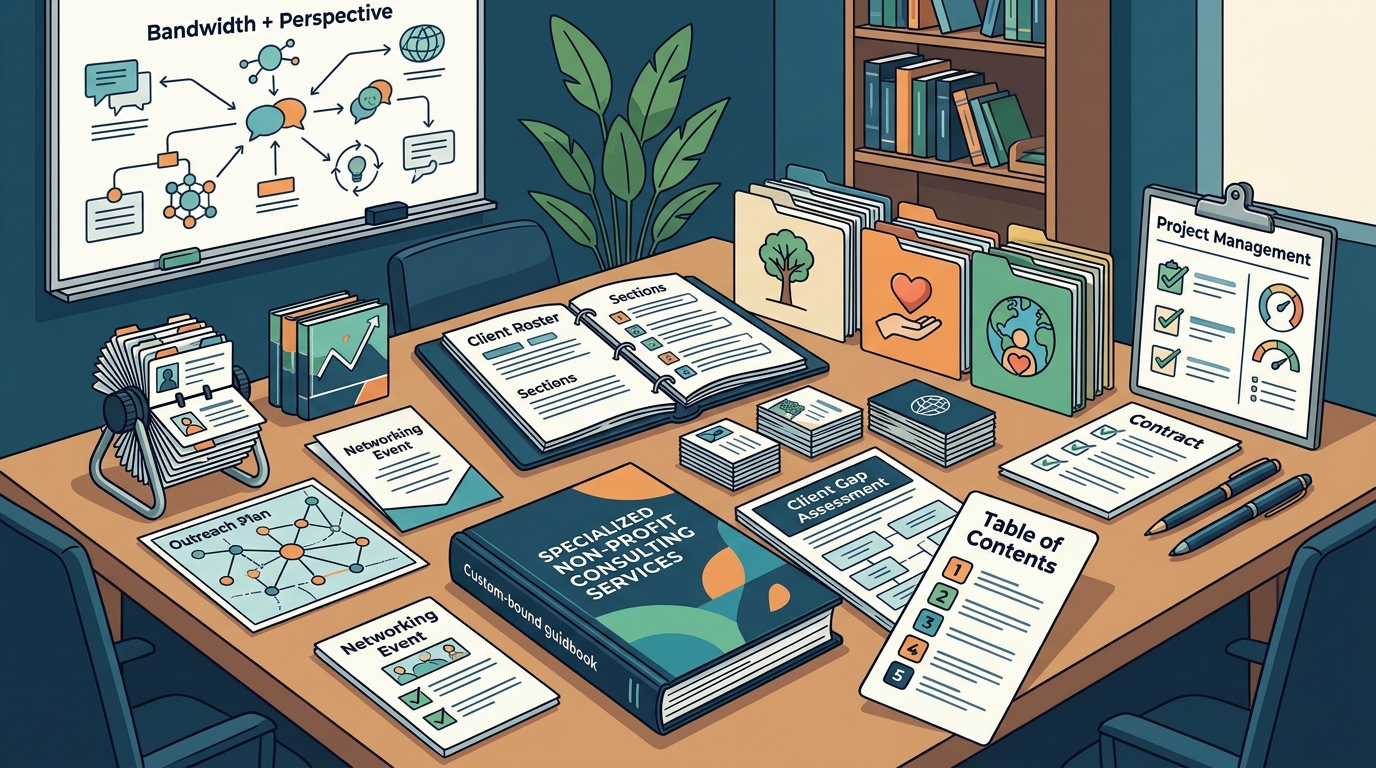
Building a client roster as a new nonprofit consultant requires a strategic approach that leverages your existing network and clearly defines your value proposition. StrategicHope emphasizes that mission-driven organizations hire for bandwidth and perspective, not just credentials. By focusing on specific, high-impact services, you can transition from seeking work to attracting clients who need your expertise.
1. Activate Your Warm Network First
Your existing professional relationships are your most valuable initial asset. Most new consultants underestimate the power of their current connections. Reach out to former colleagues, mentors, and peers to inform them of your new practice. This approach reduces the friction of cold outreach and builds trust quickly.
2. Define a Niche with Clear Pain Points
Specialization allows you to speak the specific language of your target clients. Generalist consultants often struggle to differentiate themselves in a crowded market. Identify a specific sector, such as environmental nonprofits or arts organizations, and a specific problem, like strategic planning or board development. This clarity makes it easier for potential clients to understand how you can help them.
3. Offer a Low-Barrier Entry Service
Smaller, defined projects serve as a foot in the door for larger engagements. Many nonprofits are hesitant to hire a new consultant for a massive, high-stakes project without a prior relationship. Offering a focused assessment or a short-term strategic review allows clients to experience your work style and results. This builds confidence for future, more substantial contracts.
4. Publish Thought Leadership Content
Demonstrating expertise through content establishes you as a trusted authority. Write articles or create short videos that address common challenges in the nonprofit sector. For example, you might discuss how to navigate funding uncertainty or how to align a board with organizational goals. This content attracts inbound interest from leaders who are actively seeking solutions.
5. Leverage Referral Partnerships
Building relationships with complementary service providers creates a steady stream of referrals. Connect with accountants, lawyers, and marketing agencies who serve nonprofits but do not offer strategic consulting. When their clients need strategic guidance, they can refer them to you. In return, you can refer clients who need their specific services. This mutual exchange builds a reliable pipeline.
6. Engage with Professional Associations
Participating in industry groups increases your visibility among decision-makers. Join associations relevant to your niche and volunteer for committees or speaking opportunities. These platforms allow you to connect with nonprofit executives and board members in a professional setting. Regular participation keeps you top-of-mind when these leaders need consulting support.
7. Systematize Your Outreach Process
Choosing the Right Strategy for Your Stage
Selecting the best strategy depends on your current stage of business development. If you are just launching, prioritize activating your warm network and defining a niche. As you gain experience, shift focus toward thought leadership and referral partnerships to build a more passive pipeline. A balanced mix of these strategies ensures sustainable growth.
Frequently Asked Questions
How long does it take to build a client roster as a new consultant?
It typically takes 6 to 12 months to build a stable roster of recurring clients. The timeline varies based on your network size, niche specificity, and consistency of outreach. Patience and persistence are key during this initial phase.
Should I charge for my first few consulting projects?
Yes, you should always charge for your work, even if at a discounted rate for initial clients. Charging establishes the value of your services and prevents you from being perceived as a free resource. It also helps you refine your pricing model based on real market feedback.
What is the best way to find my first client?
The best way is to reach out to your warm network and offer a specific, low-barrier service. Inform former colleagues and mentors about your new practice and ask for introductions. Your existing relationships are the most likely source of your first paid engagement.
How can I differentiate myself from other nonprofit consultants?
Differentiate yourself by focusing on a specific niche and a unique value proposition. Clearly articulate the specific problems you solve and the outcomes you deliver. Your unique perspective and experience should be central to your marketing message.
Is it necessary to have a formal business plan before starting?
A formal business plan is helpful but not strictly necessary to start. However, having a clear understanding of your target market, services, and financial goals is essential. A simple one-page plan can guide your early decisions and keep you focused.
How do I handle pricing uncertainty when starting out?
Start with a clear pricing structure based on your experience and the value you provide. Research industry standards and be transparent about your rates. As you gain experience, you can adjust your pricing to reflect your growing expertise and results.
Start Building Your Practice Today
Building a successful nonprofit consulting practice is a journey that requires strategic planning and consistent action. By leveraging your network, defining your niche, and systematizing your outreach, you can create a sustainable business that makes a positive impact. StrategicHope provides the tools and guidance you need to navigate this path with confidence. To begin your journey, calculate your income potential and explore the resources available to help you launch your practice.