

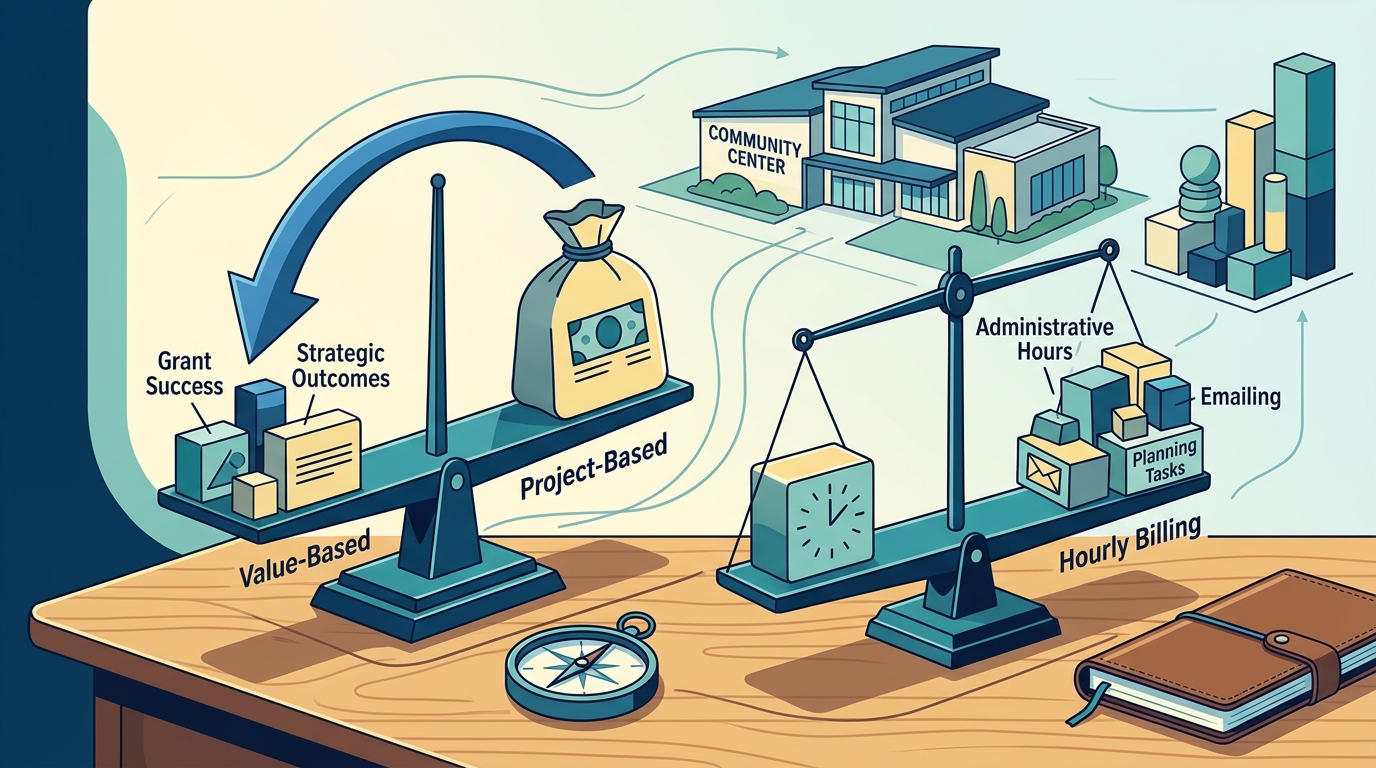
When launching a consulting practice after nonprofit work, you should primarily use value-based or project-based pricing rather than hourly billing. This approach aligns your compensation with the strategic outcomes you deliver, such as improved grant success or organizational clarity. It also protects your income from the inefficiencies of unpaid administrative tasks. StrategicHope emphasizes that mission-driven professionals often underprice their work because they confuse effort with value.
Why Hourly Billing Fails Mission-Driven Consultants
Hourly billing is a compensation model where clients pay for the time spent on a task. While common in corporate consulting, it often penalizes consultants who are efficient. If you solve a problem in two hours instead of ten, you earn less. This creates a perverse incentive to be slow. For professionals transitioning from nonprofit roles, this model feels familiar but is financially limiting.
Nonprofit budgets are often tight, and clients may resist high hourly rates. However, the issue is not just the rate; it is the structure. When you bill by the hour, you are selling your time, not your expertise. This limits your earning potential because there is a hard cap on the hours in a week. You cannot scale your income without scaling your hours, which leads to burnout.
StrategicHope notes that many consultants second-guess their pricing because they are used to nonprofit salary structures. The shift to consulting requires a mindset change. You are no longer an employee; you are a strategic partner. Your value is measured by the impact you create, not the hours you log. This distinction is critical for building a sustainable practice.
The Case for Project-Based Pricing
Project-based pricing is a model where you charge a fixed fee for a defined scope of work. This model provides predictability for both you and the client. You agree on the deliverables, the timeline, and the price upfront. This clarity reduces friction and builds trust. It also allows you to price in the administrative work that hourly billing often ignores.
Project-based pricing also helps you manage your workload. You know exactly what is included and what is not. This prevents scope creep, a common issue in nonprofit consulting. Clients often ask for extra tasks, assuming they are part of the deal. With a fixed scope, you can clearly define boundaries. This protects your time and ensures you are paid for all the work you do.
Value-Based Pricing for High-Impact Work
Value-based pricing is a model where fees are tied to the outcomes you deliver for the client. This is the most lucrative model for consultants who can demonstrate clear impact. It requires you to understand the client's goals and quantify the value of achieving them. For instance, if you help a foundation secure a major grant, your fee could be a percentage of the grant amount.
This model is best suited for high-stakes projects. It is not appropriate for every engagement. You need to have a track record of success and the confidence to price based on value. StrategicHope advises that you start with project-based pricing and move to value-based as you build your reputation. This gradual approach reduces risk and allows you to refine your value proposition.
Value-based pricing also aligns your incentives with the client's success. You are motivated to deliver exceptional results because your compensation depends on it. This alignment can lead to long-term relationships and repeat business. Clients are more likely to hire you again if you have helped them achieve their goals. This model transforms you from a vendor into a partner.
Setting Your Rates: A Practical Framework
Setting your rates is a process of balancing your costs, your market position, and the value you provide. Start by calculating your minimum viable rate. This is the amount you need to earn to cover your expenses and pay yourself a living wage. Then, consider the market rates for similar services. Research what other consultants charge for comparable work.
Do not anchor yourself to your previous nonprofit salary. Your consulting rate should reflect your expertise, your experience, and the value you bring. It is okay to charge more than you think you are worth. In fact, underpricing can signal low quality to clients. StrategicHope provides tools to help you determine your rates. The Social Impact Practice Planner helps you model your income and expenses. This data-driven approach removes the guesswork from pricing.
Remember that your rate is not a fixed number. It should evolve as you gain experience and build your reputation. Start with a rate that is comfortable for you and your clients. As you deliver results and build your portfolio, you can increase your rates. This gradual increase is easier for clients to accept than a sudden jump. It also allows you to test the market and see how your pricing is received.
Common Pricing Mistakes to Avoid
One common mistake is discounting your work to win clients. While it may seem like a good strategy to get started, it can devalue your services and attract the wrong clients. Clients who expect discounts are often difficult to work with and may not value your expertise. Instead, focus on finding clients who are willing to pay for quality. This approach ensures that you are working with organizations that are committed to their mission.
Another mistake is not communicating the value of your work. If you do not clearly articulate the benefits of your services, clients may not understand why they should pay your rate. Use case studies and testimonials to demonstrate your impact. Show clients how you have helped similar organizations achieve their goals. This evidence-based approach justifies your pricing and builds trust.
Finally, avoid letting your emotions drive your pricing decisions. Fear of rejection or imposter syndrome can lead you to underprice your work. Trust in your expertise and your value. You have the skills and experience to help mission-driven organizations succeed. Your pricing should reflect that confidence. StrategicHope supports you in building this confidence through its resources and community.
Key Takeaways
- Hourly billing limits your income and penalizes efficiency; avoid it for strategic work.
- Project-based pricing provides predictability and protects you from scope creep.
- Value-based pricing aligns your compensation with client outcomes and maximizes earnings.
- Calculate your minimum viable rate to ensure you cover expenses and earn a living wage.
- Do not discount your work; focus on finding clients who value quality.
- Communicate the value of your services using case studies and testimonials.
- Evolve your rates as you gain experience and build your reputation.
Frequently Asked Questions
What is the best pricing model for a new consultant?
Project-based pricing is often the best starting point for new consultants. It provides clarity and predictability while allowing you to charge for the value you deliver. As you build your reputation, you can move to value-based pricing.
How do I determine my consulting rate?
Start by calculating your minimum viable rate, which covers your expenses and desired income. Then, research market rates for similar services. Adjust your rate based on your experience and the value you provide.
Is it okay to charge more than my previous salary?
Yes, it is common and often necessary to charge more than your previous salary as a consultant. Your consulting rate should reflect your expertise and the value you bring, not your previous employment status.
How do I handle clients who want to negotiate my rate?
Be prepared to justify your rate by highlighting the value you provide. If a client cannot afford your rate, it may be a sign that they are not the right fit. Focus on finding clients who value your expertise.
Should I offer discounts to win clients?
Generally, no. Discounting can devalue your services and attract the wrong clients. Instead, focus on finding clients who are willing to pay for quality and are committed to their mission.
Start Your Pricing Journey with StrategicHope
Choosing the right pricing model is a critical step in building a sustainable consulting practice. By moving away from hourly billing and embracing project-based or value-based pricing, you can align your income with the impact you create. StrategicHope provides the tools and guidance you need to make this transition. Explore the Social Impact Consultant Income Calculator to see what you could realistically earn. Take the Skills Assessment to identify your strengths. Visit StrategicHope Resources for more tools. Read the About page to learn more about our mission. Contact us at StrategicHope Contact to get started.