

How Foundations Find and Hire Outside Consultants
Foundations manage billions in assets to drive social change, yet they often lack the internal bandwidth to execute complex strategic initiatives. According to recent industry data, the majority of large private foundations rely on external expertise to navigate regulatory shifts and optimize grantmaking strategies. This guide explains the precise mechanisms these organizations use to identify, vet, and engage outside consultants. (Contact StrategicHope)
Understanding Foundation Needs
Before a foundation issues a request for proposal (RFP), it must define the scope of work. Social impact consulting is not a monolith. Foundations typically hire for three distinct categories of expertise. (About StrategicHope)
Strategic Planning is the process of defining a foundation's long-term vision, grantmaking priorities, and operational structure. This often involves assessing the current state of the organization and identifying gaps in impact. Consultants in this space help leadership teams align their mission with measurable outcomes. (Home StrategicHope)
Program Evaluation involves analyzing the effectiveness of existing grantmaking programs. Foundations need to know if their dollars are creating the intended social change. This requires rigorous data collection, stakeholder interviews, and impact measurement frameworks. (Home StrategicHope)
Operational Efficiency covers the internal machinery of the foundation. This includes technology stack implementation, board governance reviews, and staff capacity building. Many foundations struggle with legacy systems that hinder their ability to respond quickly to emerging social issues.
When a foundation identifies a gap, they rarely look for a generalist. They seek specialists who understand the specific sector, whether it is climate resilience, public health, or educational equity. The consultant must demonstrate deep domain knowledge alongside consulting methodology.
The Procurement Lifecycle
The journey from need to contract follows a structured path. Understanding this timeline is critical for consultants hoping to win work.
1. Needs Assessment
Internal stakeholders, often the CEO or Program Officers, identify a problem that cannot be solved with current resources. They may conduct an internal audit or seek informal advice from peers.
2. RFP Development
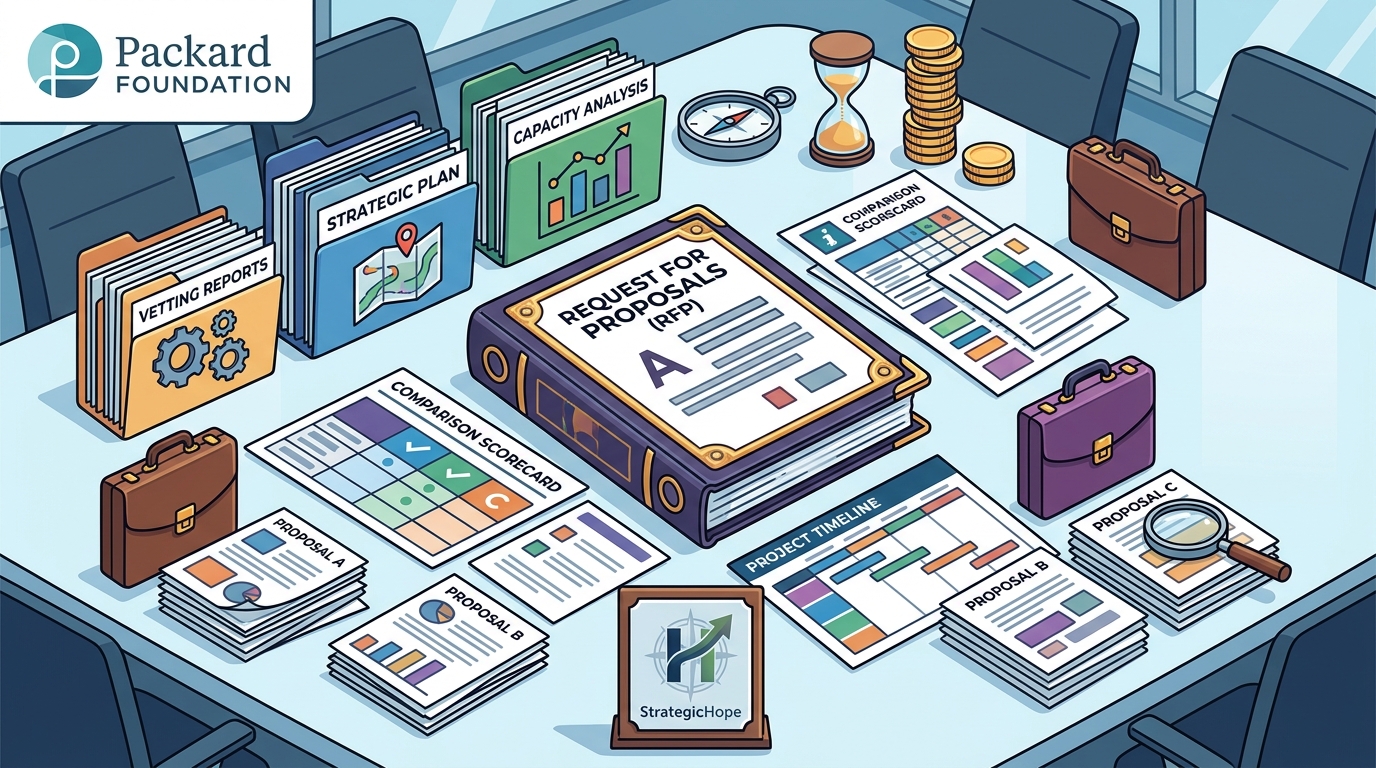
If the scope is significant, the foundation drafts a Request for Proposal. This document outlines the project goals, timeline, budget constraints, and evaluation criteria. It serves as the primary communication tool between the foundation and potential vendors.
3. Vendor Outreach
Foundations distribute the RFP through multiple channels. They may post it on industry job boards, reach out to their existing network of trusted partners, or use specialized procurement platforms. Networking remains the most powerful driver of early-stage opportunities.
4. Proposal Review
A selection committee, usually comprising senior staff and board members, reviews the proposals. They look for alignment with the foundation's values, technical competence, and cultural fit. This stage is highly competitive.
5. Interviews and Reference Checks
Shortlisted consultants are invited to present their approach. The foundation assesses communication style, problem-solving abilities, and team dynamics. Reference checks verify past performance and client satisfaction.
6. Contract Negotiation
Once a vendor is selected, legal and finance teams negotiate the terms. This includes scope definition, payment schedules, intellectual property rights, and termination clauses.
Key Selection Criteria
Foundations do not hire based on price alone. They prioritize value, trust, and expertise. The following criteria dominate the decision-making process.
Relevant Experience
Foundations want proof that the consultant has solved similar problems before. Case studies demonstrating success in the same sector or with similar organizational sizes are essential. Generic consulting frameworks are often rejected in favor of tailored approaches.
Methodology
How does the consultant work? Foundations value transparency and collaboration. They prefer consultants who involve stakeholders in the process rather than those who deliver a report and disappear. The methodology must be rigorous yet adaptable.
Cultural Fit
Social impact work is deeply personal. Foundations hire consultants who share their passion and understand the nuances of the community they serve. A consultant who speaks the language of the sector and respects the foundation's history is more likely to succeed.
Cost-Effectiveness
While budget is a constraint, foundations are wary of low-ball bids. They associate low prices with low quality or hidden costs. A clear, justified fee structure that reflects the value delivered is more attractive than the cheapest option.
Pricing and Contract Structures
Compensation models vary based on the scope and duration of the engagement. Understanding these structures helps consultants propose realistic budgets.
| Pricing Model | Description | Best For |
|---|---|---|
| Fixed Fee | A set price for the entire project scope. | Well-defined projects with clear deliverables. |
| Hourly Rate | Billing based on time spent by the consultant. | Advisory roles or uncertain scopes. |
| Retainer | Recurring monthly fee for ongoing support. | Long-term strategic partnership. |
| Value-Based | Fees tied to achieving specific outcomes. | High-impact, measurable initiatives. |
Fixed fees are common for strategic planning engagements. They provide budget certainty for the foundation. Hourly rates are used for advisory services where the scope may expand. Retainers are ideal for ongoing board coaching or continuous program evaluation.
Contracts must address intellectual property. Foundations typically own the final reports and data. Consultants retain the right to use anonymized methodologies in their portfolios. Clear terms prevent disputes over ownership and future use of work products.
Common Challenges in Engagement
Even with a strong proposal, consultants face hurdles. Recognizing these early allows for better preparation and risk management.
Bureaucratic Delays
Foundations can be slow to move. Legal reviews, board approvals, and internal budget cycles can extend timelines by months. Consultants must build patience into their project plans and maintain communication during idle periods.
Scope Creep
As the project progresses, new questions and needs emerge. Without a strict change order process, the scope can expand beyond the original agreement. Consultants must firmly but politely manage expectations and negotiate additional fees for out-of-scope work.
Stakeholder Alignment
Foundations have diverse stakeholders, including board members, staff, and grantees. Getting everyone on the same page can be difficult. Consultants must facilitate difficult conversations and ensure that the final recommendations are supported by key decision-makers.
Measuring Impact
Proving the value of consulting work is challenging. Foundations want to see tangible results. Consultants must establish clear metrics at the outset and track progress rigorously. This data is crucial for both the client and the consultant's future marketing.
Key Takeaways
- Foundations primarily hire consultants for strategic planning, program evaluation, and operational efficiency.
- The procurement process involves an RFP, proposal review, interviews, and contract negotiation.
- Relevant experience and cultural fit are often more important than price in the selection process.
- Fixed fees are common for defined projects, while retainers suit ongoing advisory roles.
- Bureaucratic delays and scope creep are the most frequent operational challenges.
- Clear communication of methodology and impact metrics builds trust with foundation leadership.
- Networking and peer referrals remain the most effective channels for initial vendor discovery.
Frequently Asked Questions
How long does the foundation hiring process take?
The timeline varies significantly. Simple advisory engagements may close in four weeks, while complex strategic planning projects can take three to six months from RFP to contract signature.
Do foundations prefer large consulting firms or independent consultants?
It depends on the scope. Large firms are often chosen for enterprise-wide transformations due to their resources. Independent consultants or boutique firms are preferred for specialized, high-touch strategic work where agility and personal attention are valued.
What is the typical budget for foundation consulting?
Budgets range from tens of thousands for small assessments to millions for multi-year strategic overhauls. Most mid-sized foundations allocate between $50,000 and $200,000 for annual consulting engagements.
How do foundations evaluate consultant proposals?
They use a weighted scoring matrix based on technical approach, relevant experience, team qualifications, and cost. Cultural fit and references also play a significant role in the final decision.
Can consultants propose value-based pricing to foundations?
Yes, though it is less common. Foundations are increasingly open to outcome-based models if the metrics are clear, measurable, and aligned with their mission. This requires strong trust and detailed contract terms.
What role does the board play in hiring consultants?
The board typically approves the budget and the final vendor selection. They may also provide input on the scope and evaluate the consultant's performance at the end of the engagement.
How important is industry specialization for foundation consultants?
Extremely important. Foundations want consultants who understand the specific social issues they address. Generalist consultants often struggle to compete against specialists who speak the language of the sector.
Next Steps for Consultants
If you are a mission-driven professional looking to build a practice that serves these organizations, you need a clear system. The SCALE Clients Flywheel Framework is a proprietary five-part system designed to help consultants generate clients with consistency and predictability. It helps you beat the feast-or-famine cycle that plagues many independent practitioners.
You can start by assessing your current skills against what mission-driven clients actually buy. Use the Skills Mission-Driven Clients Buy Assessment to identify your strengths. Then, use the Social Impact Consulting Practice Planner to model your income potential based on realistic rates and hours.
Ready to see what your practice could earn? Use the Income Calculator to see real numbers in two minutes. Stop guessing and start building a sustainable consulting practice today.