

How Foundations Find and Hire Outside Consultants
Foundations manage billions in assets to drive social change, yet they often lack the internal bandwidth to execute complex strategic initiatives. According to the Foundation Center, the nonprofit sector relies heavily on external expertise to navigate regulatory shifts and maximize grant impact. This guide explains the precise mechanisms foundations use to select, vet, and engage outside consultants. (Home StrategicHope)
Understanding the Strategic Need
Before a foundation issues a request for proposals (RFP), it must define the scope of work. This is not merely about filling a gap; it is about solving a specific organizational challenge. Foundations typically hire consultants for three primary reasons: specialized technical expertise, objective third-party validation, or temporary capacity scaling.
Strategic planning is the most common engagement type. Foundations need to align their grantmaking with evolving community needs. This requires data-driven insights that internal staff may not have the time to gather. Strategic planning is the systematic process of defining a foundation's mission, vision, and long-term goals. Without this clarity, grant dollars are often dispersed inefficiently.
Another critical area is program evaluation. Foundations must prove to their donors and the public that their interventions are working. This is where evaluation consultants step in. They design metrics, collect data, and analyze outcomes. Program evaluation is the systematic assessment of a project's design, implementation, and results. It ensures accountability and informs future funding decisions.
Finally, foundations often hire consultants for operational restructuring. This might involve merging with another entity, adopting new technology, or revising governance policies. These projects require external objectivity to navigate internal politics and ensure smooth transitions.
Standard Procurement Workflows
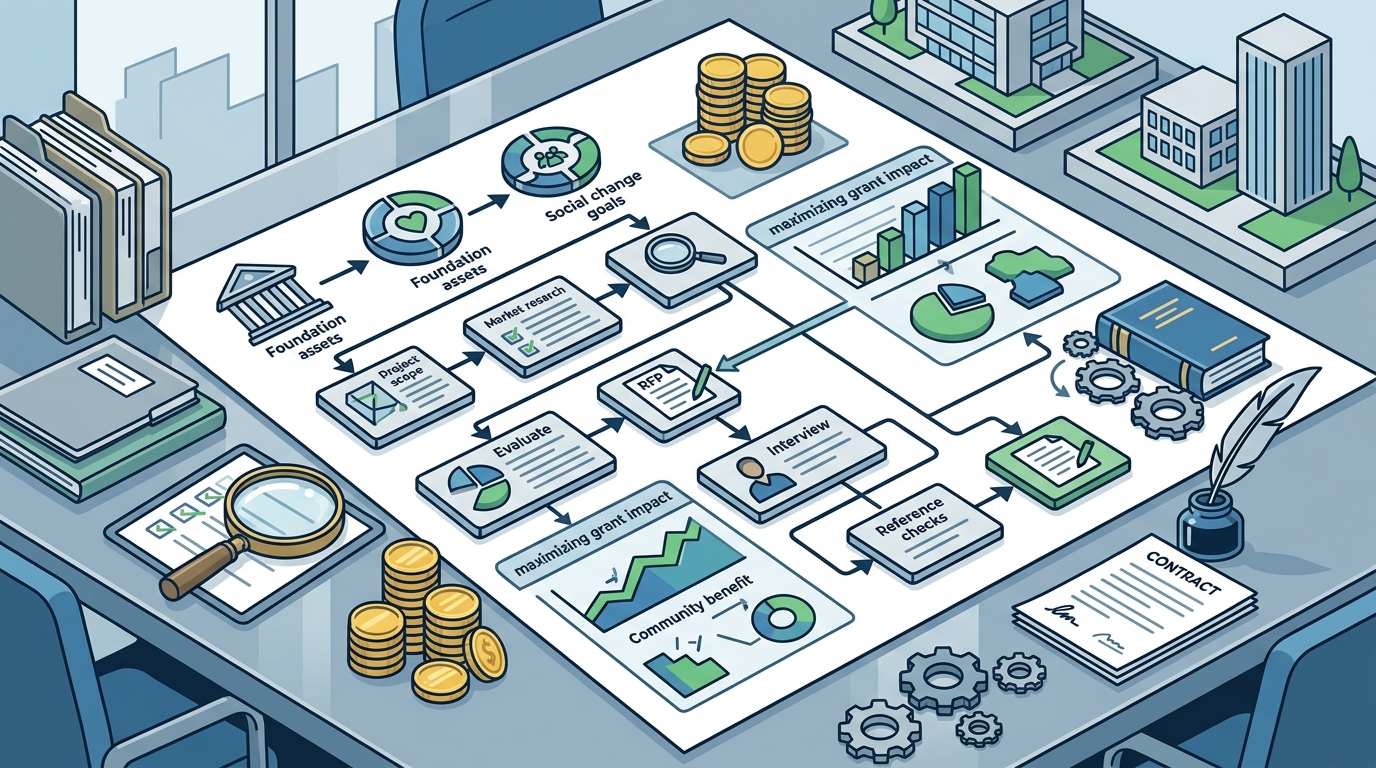
How do foundations actually find these experts? The process varies by foundation size and internal policy, but it generally follows a structured procurement workflow. Large foundations operate similarly to corporations, with dedicated procurement teams managing vendor relationships.
The Request for Proposal (RFP) Process
The RFP is the standard tool for soliciting bids. It outlines the project scope, timeline, budget constraints, and evaluation criteria. Foundations post RFPs on their websites, specialized procurement portals, and industry networks. An RFP is a formal document inviting vendors to submit proposals for a specific project. It ensures a competitive and transparent selection process.
Smaller foundations may use a Request for Qualifications (RFQ) instead. This focuses on the vendor's credentials rather than a detailed project plan. It is often used for ongoing retainer relationships where the scope is fluid. An RFQ is a document used to gather information about a vendor's capabilities and experience. It helps foundations build a shortlist of qualified partners.
Networking and Referrals
Despite formal processes, referrals remain powerful. Foundation staff often rely on recommendations from peer networks, industry associations, and previous consultants. Trust is a significant currency in the nonprofit sector. A strong referral can bypass the lengthy RFP process entirely, leading to a direct engagement.
Industry associations like the Council on Foundations play a crucial role in connecting foundations with vetted consultants. These networks provide directories and forums where professionals can showcase their expertise. The Council on Foundations is a national membership organization for private, corporate, and community foundations. It sets ethical standards and provides resources for foundation professionals.
Vendor Selection Criteria
When evaluating consultants, foundations look for specific competencies. It is not just about price. It is about fit, expertise, and reliability. The selection matrix typically includes the following factors:
- Domain Expertise: Does the consultant understand the foundation's specific focus area, such as education, health, or environmental justice?
- Methodological Rigor: Can the consultant demonstrate a proven framework for delivering results?
- Cultural Alignment: Does the consultant's approach align with the foundation's values and mission?
- Cost Efficiency: Is the proposed budget realistic and competitive within the market?
Foundations also assess the consultant's ability to facilitate collaboration. Many projects require bringing together diverse stakeholders, including community leaders, government officials, and other nonprofits. The consultant must be a skilled facilitator, not just an analyst.
The Importance of Past Performance
References are critical. Foundations will contact previous clients to verify the consultant's claims. They look for consistency, responsiveness, and the ability to handle complex challenges. A strong track record in similar contexts is a significant advantage.
Crafting Winning Proposals
For consultants, responding to an RFP is a high-stakes exercise. The proposal must be clear, compelling, and tailored to the foundation's specific needs. Generic templates rarely succeed.
Understanding the Client's Pain Points
The best proposals start by demonstrating a deep understanding of the foundation's challenges. The consultant must articulate the problem better than the foundation itself. This builds trust and shows that the consultant is invested in the outcome.
Defining the Methodology
The methodology section is the core of the proposal. It should outline the steps the consultant will take, the tools they will use, and the deliverables they will produce. It must be logical, feasible, and aligned with the foundation's timeline.
For mission-driven professionals, having a clear framework is essential. The SCALE Clients Flywheel is a proprietary five-part system designed to help consultants generate clients with consistency. The SCALE Clients Flywheel is a framework to beat the feast-or-famine cycle in consulting. It helps consultants structure their outreach and value proposition effectively.
Pricing and Budget Justification
Pricing must be transparent and justified. Foundations appreciate detailed breakdowns of costs, including staff time, expenses, and overhead. They want to know what they are paying for and why it is valuable. Competitive pricing does not mean the lowest price; it means the best value for the investment.
Contract Negotiation and Compliance
Once a consultant is selected, the contract negotiation phase begins. This stage defines the legal and operational parameters of the engagement. Key elements include:
- Scope of Work: A detailed description of the tasks and deliverables.
- Timeline: Milestones and deadlines for each phase of the project.
- Payment Terms: Schedule of payments, often tied to deliverables.
- Confidentiality: Agreements protecting sensitive data and information.
- Termination Clauses: Conditions under which the contract can be ended.
Compliance is also critical. Foundations must adhere to regulatory requirements, such as tax laws and grant management standards. The consultant must be willing to comply with these regulations, including providing necessary documentation and reporting.
Building Long-Term Relationships
The goal is not just a single project but a long-term partnership. Foundations often return to consultants who deliver exceptional results. Building trust and demonstrating reliability can lead to repeat business and referrals.
Key Takeaways
- Foundations hire consultants for specialized expertise, objective validation, and capacity scaling.
- Strategic planning and program evaluation are the most common engagement types.
- RFPs and RFQs are the primary tools for soliciting vendor bids.
- Referrals and industry networks like the Council on Foundations are critical for discovery.
- Selection criteria prioritize domain expertise, methodological rigor, and cultural alignment.
- Winning proposals must demonstrate deep understanding and clear methodology.
- Contract negotiation focuses on scope, timeline, and compliance with regulatory standards.
Frequently Asked Questions
How do foundations typically find consultants?
Foundations find consultants through formal RFPs posted on their websites, industry associations like the Council on Foundations, and professional referrals from peer networks.
What is the difference between an RFP and an RFQ?
An RFP requests a detailed proposal including methodology and price for a specific project. An RFQ requests qualifications and experience, often used for building a vendor list for ongoing needs.
What criteria do foundations use to select consultants?
Key criteria include domain expertise, past performance, methodological rigor, cultural alignment, and cost efficiency. References are heavily weighted in the decision.
How long does the procurement process take?
The timeline varies but typically takes 4 to 12 weeks. Large foundations may take longer due to complex internal approvals and compliance checks.
What should a consultant include in their proposal?
A proposal should include a clear understanding of the problem, a detailed methodology, a timeline, a budget breakdown, and relevant case studies or references.
Why is cultural alignment important to foundations?
Cultural alignment ensures that the consultant's values and approach resonate with the foundation's mission. This fosters trust and smoother collaboration throughout the project.
Can small foundations hire consultants?
Yes, small foundations often hire consultants for specific, high-impact projects like strategic planning or grantmaking evaluation, even if they lack large internal staff.
Start Your Consulting Practice
Understanding how foundations operate is the first step to securing high-value contracts. If you are a mission-driven professional looking to build a sustainable consulting practice, you need the right tools and frameworks. StrategicHope provides the resources to help you scale your impact and your income.
Use the Income Calculator to see what your practice could earn. Explore the Resources page for assessments and guides. Visit the About page to learn more about the methodology behind the framework. Contact us today to start your journey.