

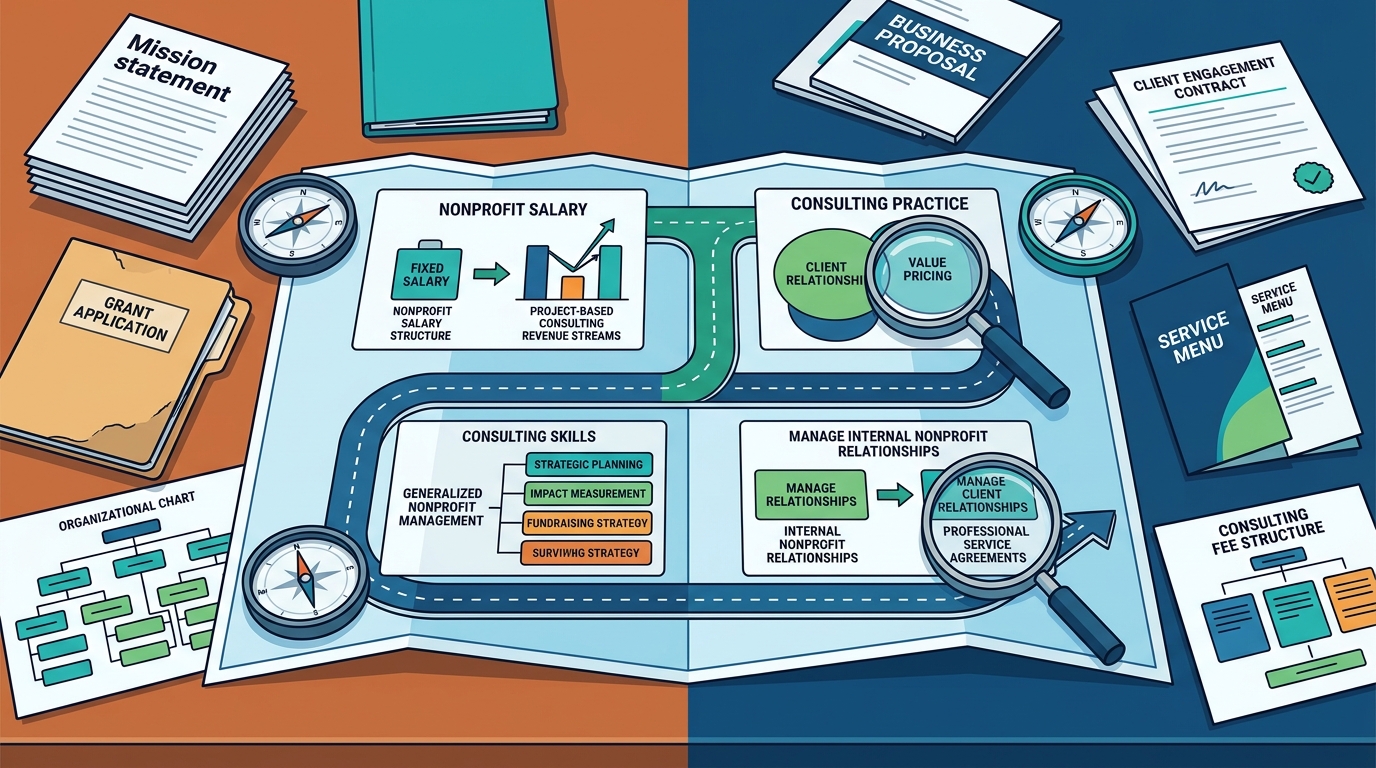
Leaving the stability of a nonprofit role to launch your own consulting practice is one of the most significant career pivots a mission-driven professional can make. According to recent industry analyses, nearly 40% of nonprofit professionals consider independent consulting to escape the "feast-or-famine" funding cycles that plague the sector. This transition is not merely a change in employment status; it is a fundamental shift in how you package your expertise, price your value, and manage client relationships. The goal is to build a practice that pays you well while serving the causes you care about, without sacrificing the personal freedom that often motivates the move in the first place.
Assessing Your Transferable Skills
Nonprofit professionals possess a unique set of skills that are highly coveted in the consulting world. However, the challenge lies in translating these internal competencies into marketable services. Strategic framing is the first step in this translation process.
Many consultants fail because they list their job duties rather than their outcomes. For example, instead of saying "managed grant applications," you must articulate "secured $2 million in unrestricted funding through strategic donor engagement." This shift in language moves you from being a task-doer to a strategic partner.
To identify your core offerings, you must audit your past work. Look for patterns in the problems you solved. Did you help organizations clarify their mission? Did you streamline operations? Did you lead strategic planning initiatives? These are the pillars of a high-value consulting practice. The Skills Mission-Driven Clients Buy Assessment is a valuable tool for pinpointing exactly which of your existing skills clients are willing to pay for. This assessment helps you move beyond guesswork and identify the specific capabilities that drive revenue in the consulting market.
Furthermore, understanding the philosophy behind building a sustainable practice is crucial. It is not enough to have the skills; you must have the confidence to charge for them. Many former nonprofit employees undervalue their work because they are accustomed to working within tight budget constraints. Recognizing that your expertise has market value is the first step toward financial independence.
Defining Your Consulting Niche
One of the most common mistakes new consultants make is trying to be everything to everyone. In the nonprofit sector, generalists often struggle to command premium rates. Specialization allows you to position yourself as an expert, which justifies higher fees and reduces the time spent on sales.
Strategic niche selection is the foundation of a profitable consulting business. Consider the following dimensions for your niche:
- Industry Focus: Do you specialize in environmental conservation, healthcare, or education?
- Functional Expertise: Are you an expert in fundraising, strategic planning, or organizational development?
- Client Stage: Do you work with emerging nonprofits, established foundations, or social enterprises?
By narrowing your focus, you can tailor your marketing messages and service offerings to a specific audience. This clarity makes it easier to attract ideal clients who are ready to invest in your solutions. The Client Gap Assessment can help you identify where your current client engine has gaps and how to fill them with targeted outreach strategies.
Additionally, consider the proprietary frameworks you can develop. Creating a unique methodology, such as the SCALE Clients Flywheel, gives you a competitive advantage. It provides a structured approach to solving client problems, which builds trust and demonstrates your expertise. This framework helps you beat the feast-or-famine cycle by generating consulting clients with consistency and predictability.
Choosing the Right Pricing Model
Pricing is often the most daunting aspect of transitioning to consulting. Nonprofit professionals are used to working within fixed budgets, but as a consultant, you must determine your own value. There are several pricing models to consider, each with its own advantages and challenges.
| Pricing Model | Description | Best For | Risk Level |
|---|---|---|---|
| Hourly Rate | Charging for each hour of work performed. | Ad-hoc projects, unclear scope. | High (Income capped by time). |
| Project-Based | A fixed fee for a defined deliverable. | Strategic planning, audits. | Medium (Scope creep risk). |
| Retainer | Recurring monthly fee for ongoing support. | Long-term advisory roles. | Low (Predictable income). |
| Value-Based | Fees tied to the outcome or ROI for the client. | High-impact strategic interventions. | High (Requires trust). |
For most mission-driven consultants, a hybrid approach works best. You might use project-based pricing for initial engagements and then transition to a retainer for ongoing support. This model provides stability and allows you to focus on delivering value rather than tracking hours. The Social Impact Consulting Practice Planner is an essential tool for modeling these scenarios. It allows you to see how rates and hours shape a thriving business, helping you set realistic income goals.
It is also important to understand the income potential of your practice. Many consultants underestimate their earning capacity because they compare their rates to nonprofit salaries. However, when you account for the value you bring and the efficiency of your systems, your potential income can be significantly higher. Use the Income Calculator to see real numbers in two minutes and adjust your pricing strategy accordingly.
Building a Predictable Client Engine
Acquiring clients is the lifeblood of any consulting practice. For former nonprofit employees, the idea of "sales" can be uncomfortable. However, consulting is fundamentally about helping organizations solve problems. If you approach client acquisition as a service rather than a transaction, it becomes much easier.
Consistency in outreach is the key to a sustainable consulting business. Relying on word-of-mouth alone is risky. You need a proactive strategy for generating leads. This includes:
- Content Marketing: Sharing your expertise through blogs, webinars, and whitepapers.
- Networking: Leveraging your existing professional network and building new relationships.
- Partnerships: Collaborating with other consultants or agencies for referrals.
The SCALE Clients Flywheel Framework is a proprietary five-part system designed to help you generate consulting clients with consistency and predictability. It moves you away from reactive business development and toward a systematic approach that nurtures leads and converts them into clients. This framework is particularly useful for beating the feast-or-famine cycle that often plagues new consultants.
Additionally, consider the resources and tools available to support your growth. From PDF guides to interactive assessments, these resources can help you refine your messaging and improve your client engagement. By investing in your own development, you are investing in the future of your practice.
Operational Excellence and Compliance
Running a consulting business requires more than just expertise; it requires strong operational systems. As a solo consultant, you are responsible for everything from invoicing to legal compliance. Establishing these systems early can save you time and stress in the long run.
Operational efficiency is the backbone of a scalable consulting practice. Key areas to focus on include:
- Legal Structure: Deciding whether to operate as a sole proprietor, LLC, or S-Corp.
- Contracts: Using clear, comprehensive contracts to protect your interests.
- Technology: Leveraging CRM and project management tools to streamline workflows.
Understanding the terms of service and refund policies is also critical. Clear policies help manage client expectations and protect you from disputes. Additionally, staying compliant with tax regulations and industry standards is essential for maintaining your professional reputation.
Finally, do not underestimate the importance of community and support. Connecting with other consultants can provide valuable insights, accountability, and encouragement. The journey from nonprofit to consulting is challenging, but it is also incredibly rewarding. By building a practice that aligns with your values and goals, you can create a career that is both profitable and purposeful.
Key Takeaways
- Strategic Framing: Translate nonprofit duties into quantifiable outcomes to increase perceived value.
- Niche Selection: Specialize in a specific industry or function to command higher rates and reduce marketing friction.
- Pricing Models: Utilize the Practice Planner to model income scenarios and choose between hourly, project, or retainer pricing.
- Client Acquisition: Implement the SCALE Clients Flywheel to create a predictable pipeline and avoid feast-or-famine cycles.
- Operational Systems: Establish legal, financial, and technological infrastructure early to ensure scalability and compliance.
- Income Potential: Use the Income Calculator to set realistic financial goals based on your desired lifestyle.
- Community Support: Leverage assessments and guides to validate your skills and gain confidence in your transition.
Frequently Asked Questions
How do I price my consulting services if I have no prior consulting experience?
Start by researching market rates for similar services in your niche. Use the Social Impact Consulting Practice Planner to model different pricing scenarios based on your desired income and available hours. Remember to factor in your unique nonprofit expertise as a value-add.
What is the SCALE Clients Flywheel Framework?
The SCALE Clients Flywheel Framework is a proprietary five-part system designed to help consultants generate clients with consistency and predictability. It focuses on building a sustainable client engine that reduces reliance on sporadic referrals.
How can I overcome the fear of selling my services?
Reframe selling as helping. Your nonprofit background has equipped you with the empathy and problem-solving skills necessary to understand client needs. Focus on the outcomes you can deliver rather than the features of your service. The Skills Assessment can help you identify your strengths and build confidence in your offerings.
Is it better to work as a sole proprietor or form an LLC?
This depends on your risk tolerance and long-term goals. An LLC offers personal liability protection, while a sole proprietorship is simpler to set up. Consult with a legal or financial professional to determine the best structure for your specific situation. Understanding the terms of service and legal implications is crucial for this decision.
How do I find my first consulting clients?
Start with your existing network. Let former colleagues and supervisors know about your new venture. Offer free or discounted assessments, such as the Client Gap Assessment, to demonstrate your value and build trust. Consistent outreach and content marketing are also key to generating leads.
What resources are available to help me transition?
StrategicHope offers a variety of resources, including the Income Calculator, Skills Assessment, and PDF Guides. These tools are designed to help you navigate the transition from nonprofit to consulting with confidence and clarity.
How long does it take to build a sustainable consulting practice?
Building a sustainable practice typically takes 6 to 12 months of consistent effort. During this time, you will refine your niche, develop your systems, and build your client base. The SCALE Clients Flywheel can help accelerate this process by providing a structured approach to client acquisition.
Start Your Consulting Journey Today
Transitioning from a nonprofit role to a successful consulting practice is a journey of empowerment and strategic growth. By leveraging your existing expertise and implementing proven frameworks, you can build a business that supports your life and serves your mission. Do not let uncertainty hold you back. Take the first step by using the Income Calculator to see what your practice could earn. Then, explore the resources and contact us to begin your transformation.