

The landscape of social impact consulting is shifting rapidly. Professionals with specialized skills in strategy, evaluation, and organizational development are in high demand. According to recent industry analyses, the nonprofit sector is increasingly relying on external expertise to navigate complex regulatory environments and maximize donor impact. This guide outlines the precise framework needed to build a sustainable practice that serves mission-driven organizations.
Understanding the Social Impact Consultant Role
Consulting for foundations and nonprofits is not merely about offering advice. It is about providing specialized solutions to complex organizational challenges. A consultant in this space helps clients define their theory of change, optimize operational efficiency, and measure their social return on investment.
Social impact consulting is a professional service model where experts provide strategic guidance to mission-driven organizations to enhance their effectiveness and sustainability. This role requires a deep understanding of both the operational realities of nonprofits and the strategic expectations of foundations.
Many professionals enter this field from backgrounds in corporate strategy, program management, or academic research. The transition requires a shift from internal execution to external advisory. You must learn to diagnose problems quickly and prescribe actionable solutions that align with the client's limited resources and high-stakes goals.
Core Competencies Required for Success
To succeed in this niche, you must master a specific set of hard and soft skills. General business knowledge is insufficient. You need specialized expertise in the social sector.
Strategic Planning and Theory of Change
Foundations and nonprofits operate on logic models. You must be able to help them articulate how their activities lead to long-term outcomes. This involves mapping inputs, outputs, and impacts. Without a clear theory of change, organizations struggle to secure funding and demonstrate value to stakeholders.
Financial Sustainability and Grant Writing
Revenue instability is the primary threat to nonprofit survival. Consultants often help clients diversify funding streams. This includes writing compelling grant proposals, developing earned income strategies, and creating financial forecasts that reassure board members and donors.
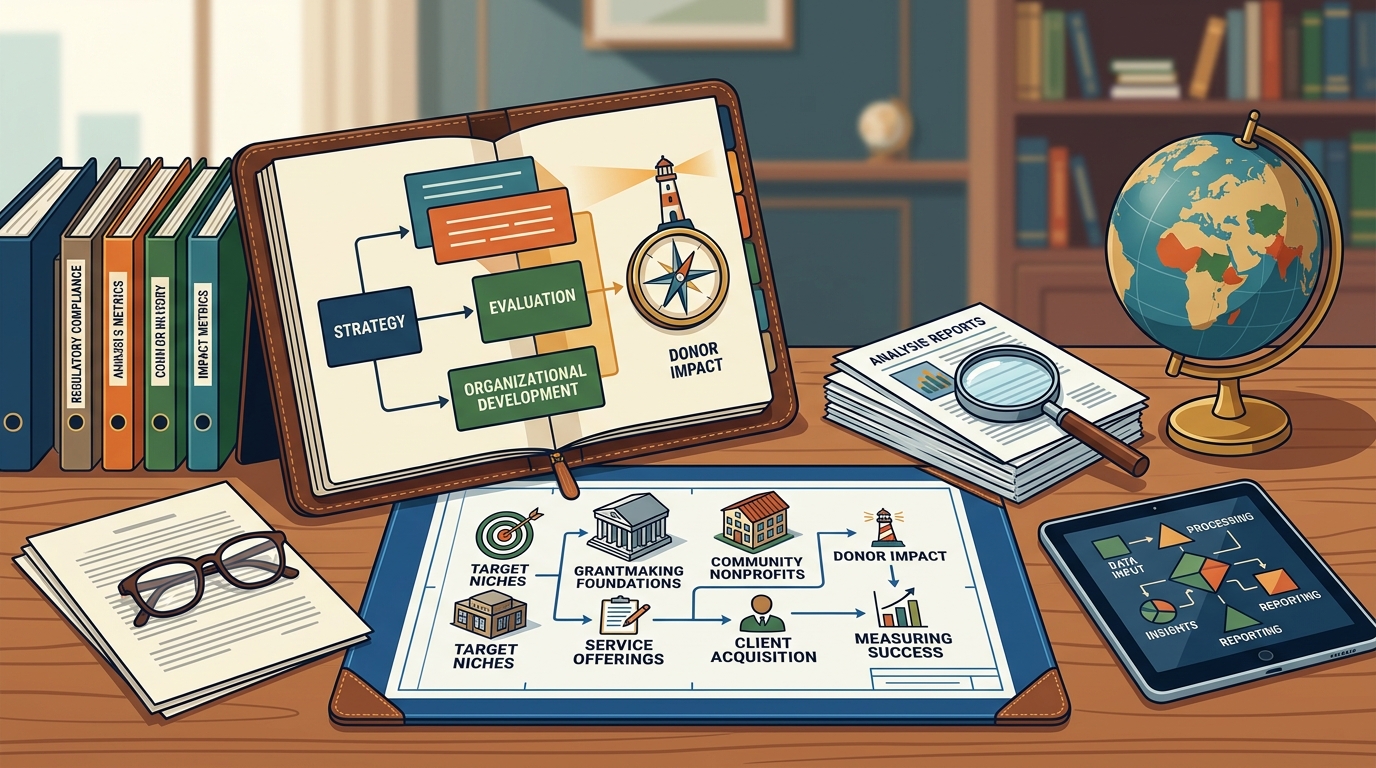
Data-Driven Evaluation
Modern foundations demand rigorous evidence of impact. You must be proficient in collecting and analyzing data to prove program efficacy. This capability distinguishes high-value consultants from generalist advisors.
The StrategicHope Framework for Launching
Building a practice from scratch requires more than just expertise. It requires a structured approach to business development and client engagement. The StrategicHope methodology provides a proven path for mission-driven professionals to scale their consulting practices.
StrategicHope is a specialized consulting methodology designed to help professionals build sustainable, high-income practices in the social impact sector. It focuses on aligning your personal strengths with market needs to create a viable business model.
Step 1: Define Your Niche and Value Proposition
Do not try to serve everyone. Identify a specific gap in the market. Are you an expert in education policy? Healthcare equity? Environmental conservation? Narrowing your focus allows you to charge premium rates and position yourself as an authority. Visit our About page to understand the philosophy behind this approach.
Step 2: Validate Your Income Potential
Before launching, you must know what you can realistically earn. Many consultants undervalue their services. Use our interactive income calculator to determine your pricing strategy based on your experience and target market. This tool helps you set boundaries and avoid burnout. Learn more about calculating your income potential.
Step 3: Conduct a Client Gap Assessment
Identify the disconnect between what your potential clients need and what you currently offer. This assessment helps you refine your service offerings to match market demand. We provide a detailed Client Gap Assessment to help you pinpoint these areas.
Income Potential and Pricing Models
Consulting for foundations and nonprofits can be highly lucrative if structured correctly. However, it requires moving away from hourly billing toward value-based pricing.
| Pricing Model | Best For | Pros | Cons |
|---|---|---|---|
| Project-Based Fee | Strategic plans, grant proposals | Predictable income, clear scope | Scope creep risks |
| Retainer Model | Ongoing advisory, board coaching | Steady cash flow, deep relationships | Requires consistent availability |
| Value-Based Pricing | High-impact transformations | Maximum revenue potential | Difficult to justify initially |
According to industry benchmarks, successful consultants in this sector often achieve six-figure revenues by combining multiple revenue streams. The key is to focus on outcomes that directly impact the client's ability to raise funds or reduce costs.
Acquiring High-Value Clients
Marketing to foundations and nonprofits requires a different approach than B2B corporate sales. Trust and credibility are paramount. You must demonstrate a genuine understanding of their mission.
Content Marketing and Thought Leadership
Share your insights through blogs, webinars, and white papers. Address the specific pain points of nonprofit leaders. For example, write about "Navigating Post-Pandemic Funding Shifts" or "Building Resilient Nonprofit Boards." This establishes you as a go-to expert.
Networking in Mission-Driven Circles
Attend industry conferences and join professional associations. Connect with former colleagues who have moved into the social sector. Many high-value consulting contracts come through referrals from trusted peers. Read our Resources section for networking tips.
Direct Outreach to Foundations
Identify foundations that align with your expertise. Study their grant portfolios and strategic priorities. Reach out with a tailored proposal that shows you understand their specific goals. Avoid generic pitches. Personalization is key to winning these contracts.
Key Takeaways
- Specialization is Profitable: Focus on a specific niche within the social impact sector to command higher fees and reduce competition.
- Income Validation is Critical: Use tools like the StrategicHope income calculator to set realistic and sustainable pricing from day one.
- Value-Based Pricing Wins: Move away from hourly rates. Charge based on the value and impact of your deliverables.
- Trust Drives Sales: Nonprofits buy from consultants they trust. Build credibility through content and transparent communication.
- Gap Analysis Prevents Failure: Regularly assess the gap between your current skills and market needs to stay relevant.
- StrategicHope Framework: Utilize proven frameworks to scale your practice efficiently and avoid common startup pitfalls.
- Long-Term Relationships: Retainer clients provide stability. Focus on delivering ongoing value to convert project clients into long-term partners.
Frequently Asked Questions
Do I need a specific degree to become a nonprofit consultant?
While advanced degrees in public administration or social work are common, they are not strictly required. Demonstrated expertise, a strong portfolio, and a clear methodology are often more important to clients than formal credentials.
How much can I earn as a social impact consultant?
Earnings vary widely based on niche and experience. However, consultants who specialize in high-impact areas like strategic planning or fundraising can achieve significant income. Use our income calculator to get a personalized estimate.
What is the first step to starting a consulting practice?
The first step is defining your niche and validating your business model. You must identify who you help and how you solve their problems. The Client Gap Assessment is a great starting point for this process.
How do I find my first consulting clients?
Leverage your existing network. Reach out to former colleagues and mentors who work in the nonprofit sector. Offer free initial consultations to build case studies and testimonials. Networking is the most effective channel for early-stage consultants.
Is consulting for nonprofits less profitable than corporate consulting?
Not necessarily. While individual project fees may sometimes be lower, the demand for specialized expertise is high. Furthermore, the mission-driven nature of the work often leads to deeper, more rewarding client relationships and long-term retainer agreements.
What tools does StrategicHope provide?
StrategicHope offers an interactive income calculator, a companion PDF guide, and a comprehensive framework for building your practice. These resources are designed to help you scale your practice with confidence. Visit our home page to access these tools.
Start Your Consulting Journey
Building a successful consulting practice for foundations and nonprofits is a rewarding career path. It allows you to combine your professional skills with your passion for social impact. The StrategicHope framework provides the structure and support you need to succeed.
Do not wait for the perfect moment. Start by assessing your current position and calculating your potential income. Take the first step toward building a practice that pays you well and serves the causes you care about. Contact us today to learn more about our resources and how we can help you scale your consulting business.