

Strategic Planning Process for Mission-Driven Scientific Initiatives
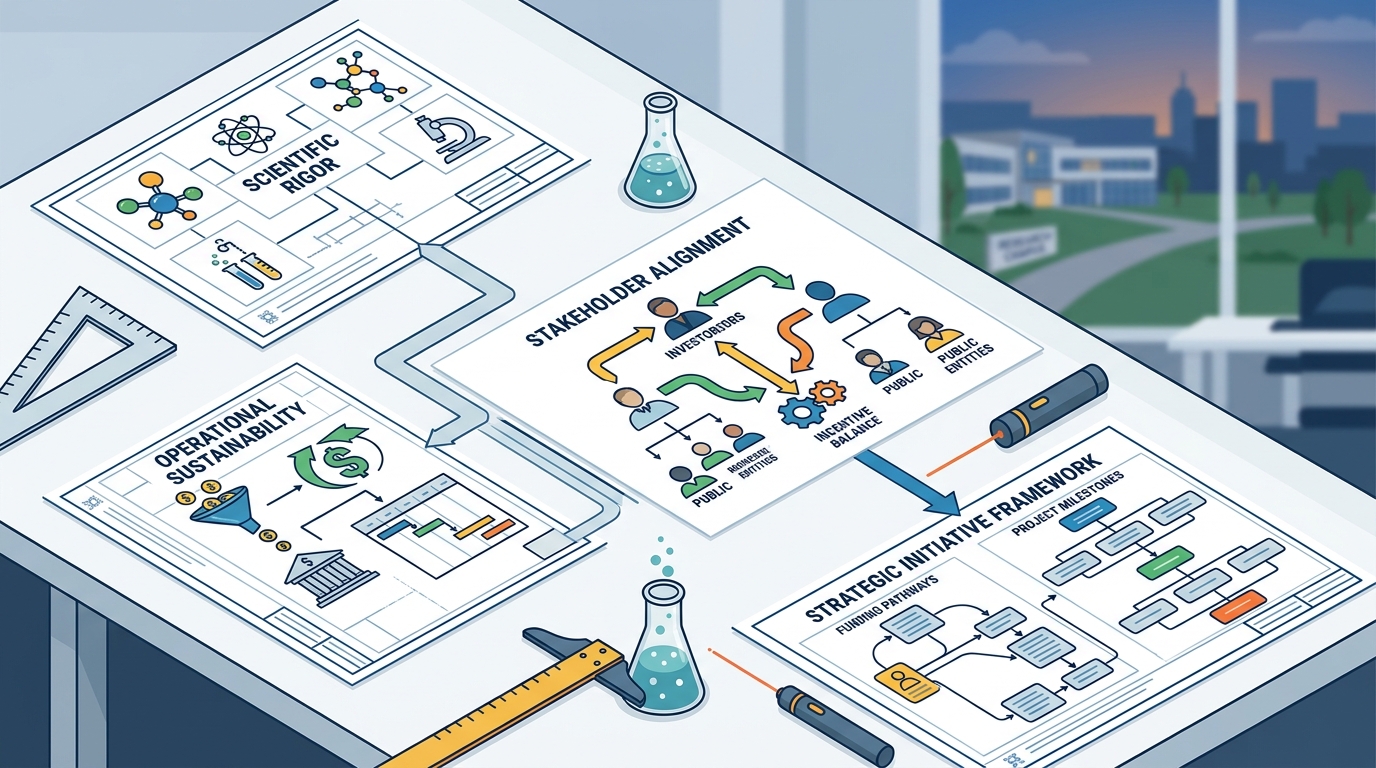
Building a scientific initiative that serves the public good requires more than just brilliant research. It demands a rigorous strategic planning process that aligns scientific rigor with operational sustainability. According to recent industry analyses, over 60% of mission-driven projects fail not due to lack of scientific merit, but because of misaligned stakeholder incentives and unclear funding pathways. This guide outlines the exact framework used by top-tier consultants to launch initiatives like the Innovative Genomics Institute and the Center for the Science of Psychedelics. (Contact StrategicHope)
Foundational Alignment and Stakeholder Mapping
Strategic planning for scientific initiatives begins with a clear definition of mission. Mission alignment is the practice of ensuring every operational decision directly supports the core scientific and social goals of the organization. Without this alignment, even the most groundbreaking research can lose funding or public support.
The first step is stakeholder mapping. In mission-driven science, stakeholders include not just funders, but also regulatory bodies, academic institutions, and the public. You must identify who benefits from the science and who holds the power to enable or block its implementation.
Consider the launch of the Center for the Science of Psychedelics at UC Berkeley. This initiative required aligning the academic rigor of the university with the emerging regulatory landscape of psychedelic medicine. The strategic plan had to address both scientific validity and public perception simultaneously. This dual focus is critical for any initiative dealing with controversial or novel scientific topics.
To achieve this, consultants often use a Stakeholder Influence Matrix. This tool categorizes stakeholders by their level of interest and power. High-power, high-interest stakeholders require active management. High-power, low-interest stakeholders require keeping satisfied. This prevents the common pitfall of surprising key decision-makers late in the process.
Applying the SCALE Framework to Science
For mission-driven professionals, the SCALE Clients Flywheel is a five-part system designed to beat the feast-or-famine cycle. While originally designed for consulting practices, this framework is equally powerful for scientific initiatives that need consistent engagement and funding.
The SCALE framework stands for:
- Strategic Positioning: Defining the unique scientific niche and value proposition.
- Content Marketing: Sharing research insights to build authority and trust.
- Alliances: Partnering with other institutions, foundations, and industry leaders.
- Lead Generation: Creating mechanisms for funders and partners to engage.
- Engagement: Nurturing relationships through transparent reporting and updates.
When applied to scientific initiatives, this framework ensures that the initiative is not just a research project, but a sustainable ecosystem. For example, the Innovative Genomics Institute (IGI) at UC Berkeley did not just focus on gene editing research. They built a strategic position around making gene editing safe and equitable for all. This positioning attracted alliances with major foundations like the Packard and Moore foundations.
The key is to treat the scientific initiative as a product that needs a market. The market is the community of funders, policymakers, and beneficiaries. By applying the SCALE framework, you create a repeatable system for growth rather than relying on one-off grants or luck.
Sustainable Funding Models for Scientific Work
One of the biggest challenges in mission-driven science is funding sustainability. Many initiatives rely on short-term grants that create uncertainty. A robust strategic plan must include a diversified funding model.
There are three primary funding models for scientific initiatives:
| Funding Model | Pros | Cons | Best For |
|---|---|---|---|
| Foundation Grants | Large capital injections, mission alignment | Restrictive, competitive, short-term | Early-stage research and pilot programs |
| Corporate Partnerships | Steady income, industry access | Conflicts of interest, brand risk | Applied research and technology transfer |
| Public-Private Partnerships | Scalability, policy influence | Bureaucratic, slow decision-making | Large-scale infrastructure and policy work |
Strategic planning involves selecting the right mix of these models. For instance, the Ocean Conservancy’s Trash Free Seas program utilized a mix of corporate partnerships and foundation grants to mobilize action on plastic pollution. This diversification reduced their reliance on any single source of income.
It is also critical to have a Financial Sustainability Plan. This document outlines how the initiative will survive beyond the initial grant period. It might include plans for membership models, fee-for-service consulting, or endowment building. Without this plan, the initiative is vulnerable to funding cliffs.
Operational Execution and Governance
Even the best strategic plan fails without operational execution. This involves setting up the governance structure, hiring the right team, and implementing project management systems.
Governance is the system of rules, practices, and processes by which a scientific initiative is directed and controlled. For mission-driven initiatives, the board of directors or advisory committee plays a crucial role. They provide strategic oversight and help navigate complex regulatory environments.
When launching a new scientific center, it is essential to define clear roles and responsibilities. Who makes decisions on research direction? Who handles public relations? Who manages financial compliance? Ambiguity in these roles leads to inefficiency and conflict.
Additionally, operational execution requires robust data management. Scientific initiatives generate vast amounts of data. A strategic plan must include protocols for data sharing, privacy, and security. This is particularly important for initiatives involving human subjects or sensitive genetic information.
Finally, consider the Practice Planner approach. Just as consultants use tools to manage their practice, scientific initiatives need dashboards to track key performance indicators (KPIs). These might include research milestones, funding secured, publications, and policy impacts. Regular review of these metrics allows for agile adjustments to the strategic plan.
Case Studies in Scientific Strategy
Looking at real-world examples provides valuable insights into effective strategic planning. Two notable examples from the field are the Innovative Genomics Institute and the Center for the Science of Psychedelics.
The Innovative Genomics Institute (IGI) was launched to make gene editing safe and equitable. The strategic plan focused on three pillars: research, education, and policy. By aligning these pillars, IGI was able to attract significant funding from foundations like Packard and Simons. Their strategy also included a strong emphasis on public engagement, which helped build trust in the technology.
The Center for the Science of Psychedelics at UC Berkeley faced a different challenge. The topic was controversial and heavily regulated. The strategic plan had to prioritize scientific rigor and regulatory compliance. They partnered with bestselling author Michael Pollan to help bridge the gap between science and public understanding. This alliance was crucial for gaining legitimacy and public support.
Both cases highlight the importance of Strategic Alliances. No scientific initiative succeeds in isolation. Building alliances with academic institutions, foundations, and industry leaders amplifies impact and reduces risk.
Key Takeaways
- Mission Alignment is Critical: Ensure every operational decision supports the core scientific and social goals.
- Use the SCALE Framework: Apply the five-part system to build a sustainable client and funder pipeline.
- Diversify Funding: Avoid reliance on single sources by mixing grants, partnerships, and public-private models.
- Define Governance Early: Clear roles and responsibilities prevent conflict and inefficiency.
- Build Strategic Alliances: Partner with foundations, academia, and industry to amplify impact.
- Track KPIs Rigorously: Use dashboards to monitor research milestones and funding progress.
- Engage the Public: Transparent communication builds trust and support for controversial topics.
Frequently Asked Questions
What is the first step in strategic planning for a scientific initiative?
The first step is defining the mission and conducting a stakeholder mapping exercise to identify key influencers and beneficiaries.
How can scientific initiatives avoid the feast-or-famine funding cycle?
By applying the SCALE Clients Flywheel framework to build a consistent pipeline of funders and partners, rather than relying on one-off grants.
What is the role of governance in mission-driven science?
Governance provides the structure for decision-making, ensuring that the initiative remains aligned with its mission and complies with regulatory requirements.
Why are strategic alliances important for scientific initiatives?
Alliances with foundations, academia, and industry provide credibility, resources, and access to networks that a single initiative cannot build alone.
How do you measure the success of a scientific strategic plan?
Success is measured by tracking key performance indicators (KPIs) such as research milestones, funding secured, publications, and policy impacts.
What is the SCALE framework?
SCALE is a five-part system for strategic growth: Strategic Positioning, Content Marketing, Alliances, Lead Generation, and Engagement.
Can a scientific initiative be sustainable without corporate funding?
Yes, by diversifying funding sources to include foundation grants, public-private partnerships, and membership models.
Start Your Strategic Journey
Building a mission-driven scientific initiative is a complex but rewarding endeavor. By following a structured strategic planning process, you can align your scientific goals with operational sustainability. If you are ready to build a practice that serves the causes you care about, explore the resources available at StrategicHope. Our Client Gap Assessment and Income Calculator can help you identify gaps in your strategy and visualize your potential impact. Visit our About page to learn more about our experience in guiding scientific and mission-driven organizations.