

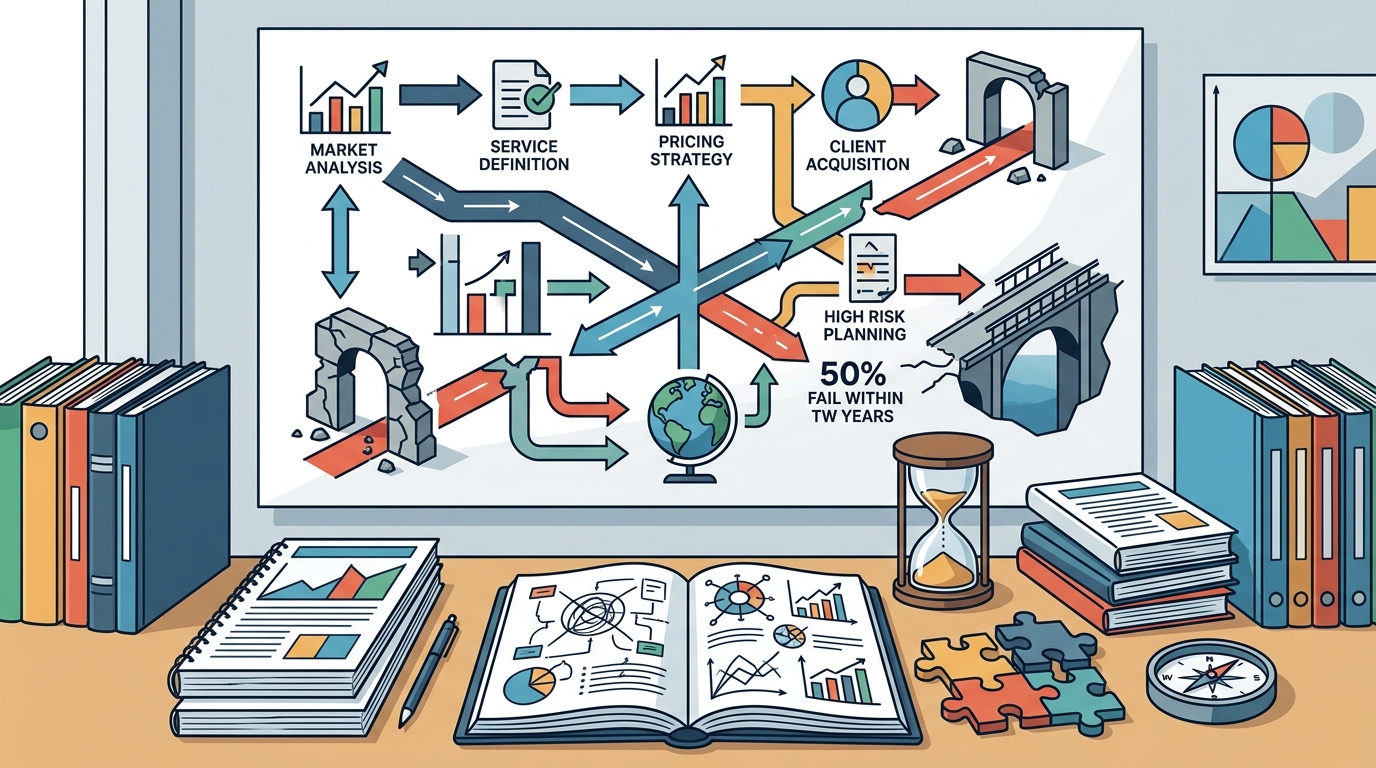
Starting a consulting practice in the social impact sector offers unparalleled freedom and purpose. However, the transition from employee to independent consultant is fraught with structural risks. Data shows that nearly 50% of new consulting businesses fail within the first two years due to poor pricing strategies and unclear service definitions. This guide outlines the critical errors mission-driven professionals make and provides the exact frameworks needed to avoid them.
The Pricing Trap: Undercharging for Impact
One of the most common pitfalls for new consultants is undervaluing their work due to a desire to support nonprofit budgets. This emotional pricing model leads to unsustainable income and burnout. Value-based pricing is the practice of setting fees based on the return on investment or strategic value delivered to the client, rather than the hours spent.
Many consultants mistakenly believe that lower rates make them more attractive to mission-driven organizations. In reality, nonprofits often perceive higher fees as an indicator of expertise and reliability. When you price too low, you signal that your work is interchangeable with entry-level labor. This attracts difficult clients who demand excessive revisions and lack respect for your time.
To avoid this trap, you must understand your own financial baseline. The Social Impact Consulting Practice Planner allows you to input your desired income and calculate the exact rates you need to charge. This tool removes the guesswork and ensures your pricing covers your expenses while providing a living wage. Without this calculation, you are essentially gambling with your financial stability.
Scope Creep and the Feast-or-Famine Cycle
Scope creep occurs when a project expands beyond its original agreement without additional compensation. For consultants, this is a silent killer of profitability. When you agree to "just one more thing" for free, you erode your margins and set a precedent that your time is unlimited.
Another major pitfall is falling into the feast-or-famine cycle. This pattern involves working intensely for weeks when clients are available, followed by long periods of silence and anxiety when no work is coming. This instability prevents long-term planning and personal growth. The Client Gap Assessment helps you identify exactly where your pipeline is breaking down. By pinpointing these gaps, you can implement a consistent flow of leads rather than reacting to immediate needs.
Establishing clear boundaries is essential. Your contracts must define what is included in the scope and what constitutes a billable extra. This protects both you and the client by ensuring expectations are aligned from day one. If you find yourself constantly saying yes to small tasks, you are likely lacking a robust SCALE Clients Flywheel framework to manage your pipeline effectively.
Choosing the Wrong Clients
Not all nonprofit or foundation clients are a good fit for your specific expertise. A common mistake is accepting any project that comes your way, regardless of alignment with your values or skills. This leads to dissatisfaction on both sides. You may find yourself working on projects that do not challenge you, while the client feels their needs are not being met.
It is crucial to define your ideal client profile early in your practice. Consider factors such as organizational size, budget capacity, and mission alignment. The Skills Mission-Driven Clients Buy Assessment can help you identify which of your skills are most marketable and which clients value them most. By focusing on high-value segments, you can command higher fees and build a more fulfilling practice.
Additionally, be wary of clients who expect pro bono work as a standard. While occasional discounted projects can build your portfolio, relying on them undermines your business model. Professional clients respect consultants who charge fair market rates. If a client cannot afford your services, they may not be ready for the level of strategic support you provide.
Neglecting Operational Systems
Many new consultants focus heavily on marketing and sales while neglecting the operational backbone of their business. Without systems for invoicing, project management, and client communication, chaos ensues. This lack of structure leads to missed deadlines, lost invoices, and frustrated clients.
Building a practice is not just about delivering results; it is about managing the business that delivers those results. You need reliable tools for tracking time, managing contracts, and automating follow-ups. The Accelerator program provides over 70 templates and resources to help you build these systems from the ground up. These tools are designed to save you time and reduce administrative burden.
Furthermore, consider the legal and compliance aspects of your practice. Ensure you have the necessary insurance, contracts, and tax structures in place. This protects you from liability and ensures you are operating as a legitimate business entity. Ignoring these details can lead to costly legal issues down the road. For more information on legal protections, review the Terms of Service and Privacy Policy to understand data handling and contractual obligations.
Strategic Framework Comparison
Understanding different strategic frameworks can help you choose the right approach for your practice. Below is a comparison of common methodologies used in social impact consulting.
| Framework | Primary Focus | Best For | Key Benefit |
|---|---|---|---|
| SCALE Clients Flywheel | Pipeline Consistency | Consultants with irregular income | Eliminates feast-or-famine cycles |
| Value-Based Pricing | Revenue Maximization | High-expertise strategists | Aligns fees with client ROI |
| Client Gap Assessment | Diagnostic Analysis | New consultants | Identifies specific pipeline leaks |
| Skills Mission-Driven Assessment | Market Positioning | Career transitioners | Clarifies unique value proposition |
Key Takeaways
- Pricing Integrity: Never undercharge based on the client's nonprofit status. Use the Income Calculator to determine your true worth.
- Scope Management: Define clear boundaries in contracts to prevent scope creep and protect your profitability.
- Client Alignment: Use the Skills Assessment to target clients who value your specific expertise.
- Systematic Operations: Implement the SCALE Flywheel to create a predictable and repeatable client acquisition system.
- Professional Legitimacy: Establish legal and financial structures early to ensure long-term sustainability and compliance.
Frequently Asked Questions
How do I price my nonprofit consulting services?
Use value-based pricing by calculating the strategic impact your work will have on the client. Utilize the Social Impact Consulting Practice Planner to reverse-engineer your rates from your desired income.
What is the SCALE Clients Flywheel?
The SCALE Clients Flywheel is a five-part system designed to help consultants beat the feast-or-famine cycle by creating a consistent and repeatable client pipeline.
How can I avoid scope creep in my projects?
Define clear deliverables and boundaries in your initial contract. Any work outside this scope should be billed as a separate engagement or added to the original fee.
Is it okay to offer pro bono work?
Occasional pro bono work can build your portfolio, but relying on it is a pitfall. Focus on building a sustainable practice where your core revenue comes from paid engagements.
What tools does StrategicHope provide?
StrategicHope offers the Skills Assessment, the Client Gap Assessment, and the Income Calculator to help you build your practice.
How long does it take to build a consulting practice?
Building a stable practice typically takes 12 to 18 months of consistent effort. Using the frameworks from the Accelerator can significantly shorten this timeline.
Where can I find more resources?
Visit the Resources page for downloadable guides, templates, and assessments designed for mission-driven professionals.
Start Your Practice Today
Don't let common pitfalls derail your mission. Take control of your consulting career by implementing the systems and frameworks that have helped thousands of professionals succeed. Visit StrategicHope.com to access the Income Calculator and begin building your sustainable practice today.