

Building a sustainable consulting practice in the social impact sector requires more than just subject matter expertise. It demands a strategic framework for pricing, client acquisition, and service delivery. According to industry benchmarks, mission-driven professionals who utilize structured income calculators and proprietary frameworks can scale their practices significantly faster than those relying on ad-hoc methods. This guide details the exact steps to transition into a high-income consulting role serving foundations and nonprofits. (Contact StrategicHope)
Foundations of Social Impact Consulting
Social impact consulting is the practice of providing strategic advice to organizations dedicated to social change. Social impact consulting is the application of business strategy to nonprofit and foundation goals. This field encompasses a wide range of services, from strategic planning and fundraising to organizational development and program evaluation.
Professionals in this space often come from diverse backgrounds, including academia, corporate social responsibility, and direct nonprofit leadership. The transition to consulting allows these experts to leverage their experience while maintaining flexibility and autonomy. After nearly 20 years in the field, it is clear that success relies on a systematic approach rather than intuition alone. (WDI The World)
Consultants work with a variety of entities, including:
- Private foundations seeking to optimize grant-making strategies.
- Nonprofits aiming to increase operational efficiency.
- Corporate social responsibility teams looking to align with social causes.
- Scientific institutions requiring strategic launch support.
Understanding the unique pressures these organizations face is critical. They often operate with limited resources and high stakes, requiring consultants who can deliver high-value outcomes with precision and empathy.
Identifying Your Niche and Value Proposition
Generalists often struggle to command premium rates in the consulting market. Specializing in a specific area allows you to position yourself as an expert. For example, you might focus on science philanthropy, environmental conservation, or educational equity.
To identify your niche, you must assess your existing skills and experience. The Skills Mission-Driven Clients Buy Assessment is a valuable tool for this process. It helps you discover which specific competencies are most valuable to potential clients. By aligning your strengths with market needs, you can create a compelling value proposition.
Consider the following questions:
- What specific problems have you solved in your previous roles?
- Which industries or causes do you have deep experience in?
- What unique perspective can you offer that others cannot?
Once you have identified your niche, you can begin to craft your messaging. Your messaging should clearly articulate the benefits of working with you, focusing on the outcomes you deliver rather than just the services you provide.
Pricing Models and Income Potential
One of the biggest challenges for new consultants is pricing. Many undervalue their work, leading to burnout and unsustainable practices. Strategic pricing is the foundation of a profitable consulting business. It ensures that you are compensated fairly for your expertise and time.
There are several common pricing models in the social impact sector:
| Pricing Model | Description | Best For |
|---|---|---|
| Hourly Rate | Charging for each hour of work performed. | Ad-hoc projects or initial consultations. |
| Project-Based | A fixed fee for a defined scope of work. | Strategic plans, assessments, or workshops. |
| Retainer | Recurring monthly fee for ongoing support. | Long-term advisory roles. |
| Value-Based | Fees tied to the outcomes or impact achieved. | High-impact strategic interventions. |
Using an interactive income calculator can help you determine the right rates for your practice. By inputting your desired income and available hours, you can calculate the minimum rate you need to charge. This data-driven approach removes guesswork and ensures financial viability.
It is also important to consider the total cost of doing business. This includes software subscriptions, marketing expenses, and professional development. Factor these costs into your pricing to maintain profitability.
Client Acquisition and the SCALE Flywheel
Acquiring clients consistently is the lifeblood of any consulting practice. The SCALE Clients Flywheel Framework is a proprietary five-part system designed to beat the feast-or-famine cycle. It provides a predictable method for generating consulting clients with consistency.
The framework typically involves:
- Strategy: Defining your ideal client profile and value proposition.
- Content: Creating valuable content that attracts your target audience.
- Activation: Engaging with potential clients through networking and outreach.
- Conversion: Turning leads into paying clients through effective proposals.
- Expansion: Upselling and cross-selling to existing clients.
Implementing this framework requires discipline and consistency. By focusing on each step of the flywheel, you can build a robust client engine that drives growth over time. The Client Gap Assessment is another useful tool for identifying where your current client acquisition efforts may be lacking.
Networking remains a powerful tool in the social impact sector. Attend industry conferences, join professional associations, and engage in online communities. Building relationships with potential clients and partners can lead to valuable referrals and opportunities.
Essential Tools for Practice Management
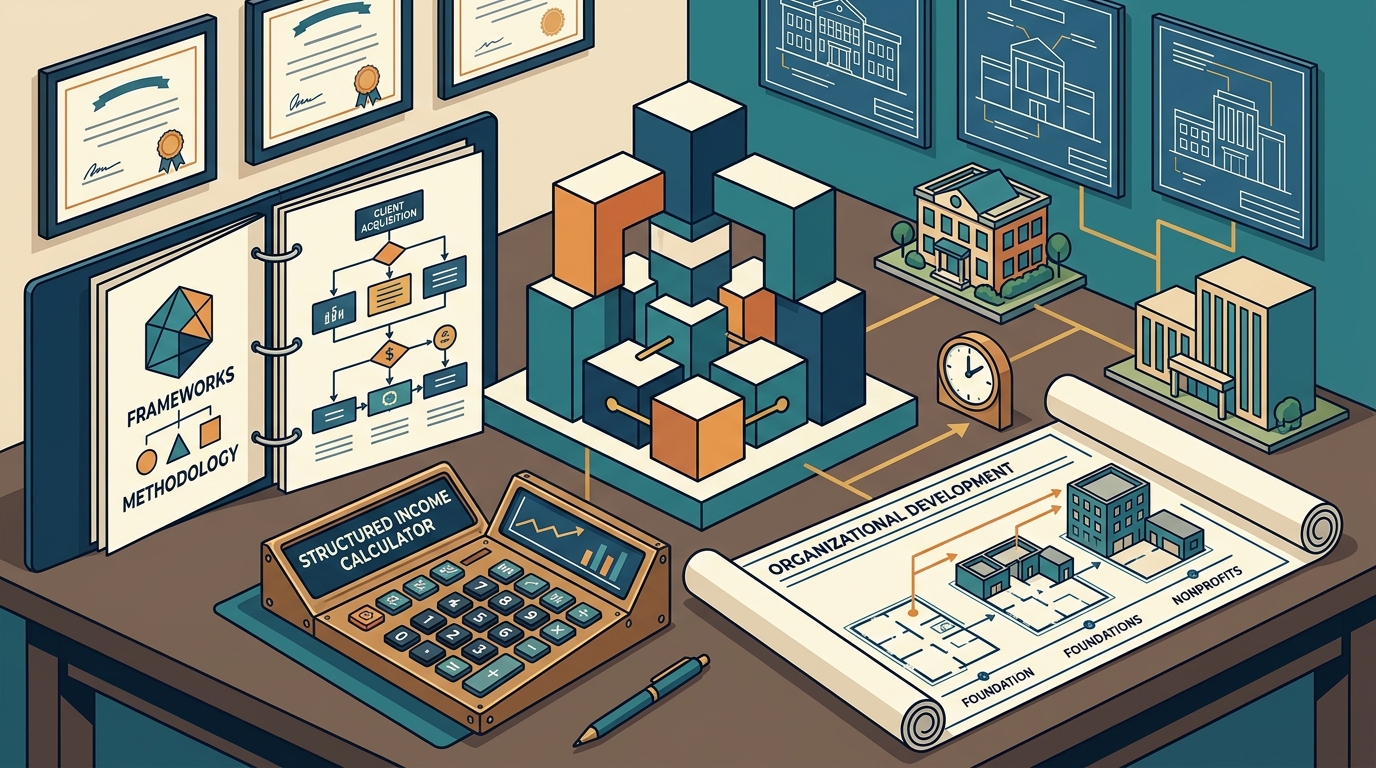
Running a successful consulting practice requires the right tools. From project management to financial tracking, having a streamlined tech stack can save you time and reduce errors. The Social Impact Consulting Practice Planner is a comprehensive resource for organizing your business operations.
Key tools to consider include:
- CRM Software: To track leads, clients, and communications.
- Project Management Tools: To manage tasks, deadlines, and deliverables.
- Financial Software: To handle invoicing, payments, and tax preparation.
- Content Creation Tools: To produce high-quality marketing materials.
Investing in the right tools early on can pay dividends in efficiency and professionalism. It also allows you to scale your practice without being bogged down by administrative tasks.
Key Takeaways
- Experience Matters: StrategicHope has nearly 20 years of real-world consulting experience, providing a proven roadmap for success.
- Structured Pricing: Using an income calculator helps determine viable rates based on desired income and available hours. (WDI The World)
- Proprietary Frameworks: The SCALE Clients Flywheel offers a systematic approach to consistent client acquisition.
- Niche Specialization: Focusing on specific areas like science philanthropy or environmental conservation increases market value.
- Assessment Tools: The Skills Mission-Driven Clients Buy Assessment helps identify high-value competencies.
- Practice Planning: The Social Impact Consulting Practice Planner aids in operational organization and growth.
- Client Gap Analysis: Regularly assessing your client pipeline helps identify and fix acquisition bottlenecks.
Frequently Asked Questions
What is social impact consulting?
Social impact consulting is the practice of providing strategic advice to organizations dedicated to social change, including nonprofits and foundations.
How do I price my consulting services?
You can use an interactive income calculator to determine your rates based on your desired income and available working hours, ensuring financial sustainability.
What is the SCALE Clients Flywheel?
The SCALE Clients Flywheel is a proprietary five-part system designed to help consultants generate clients with consistency and predictability.
How can I identify my niche?
Take the Skills Mission-Driven Clients Buy Assessment to discover which of your skills are most valuable to potential clients in the social impact sector.
What tools do I need to start a consulting practice?
Essential tools include a CRM for client management, project management software, financial tracking tools, and a practice planner for operational organization.
How do I avoid the feast-or-famine cycle?
Implementing a structured client acquisition framework like the SCALE Flywheel helps create a predictable pipeline of opportunities.
Who can benefit from social impact consulting?
Foundations, nonprofits, corporations with CSR goals, and scientific institutions can all benefit from strategic consulting services.
Where can I learn more about scaling a consulting practice?
You can explore the resources on StrategicHope, including the Practice Planner and various assessments, to learn how to scale your practice effectively.
Start Your Practice Today
Transitioning to a career in social impact consulting is a powerful way to leverage your expertise for good while building a sustainable business. By using the right frameworks, tools, and strategies, you can create a practice that pays well and serves the causes you care about. Begin your journey by exploring the resources available on StrategicHope and taking the first step toward your consulting career.