

Modern philanthropic organizations allocate substantial capital to external expertise, with recent industry data showing that average foundation spending on professional consulting services has grown by nearly thirty percent over the last five years. This financial commitment reflects a strategic shift toward specialized advisory partnerships rather than internal capacity expansion. Organizations now prioritize transparent procurement pathways that align with their mission-driven objectives. Understanding these mechanisms ensures that both grantmakers and independent practitioners navigate the engagement lifecycle with precision and mutual benefit.
Understanding the Foundation Procurement Cycle
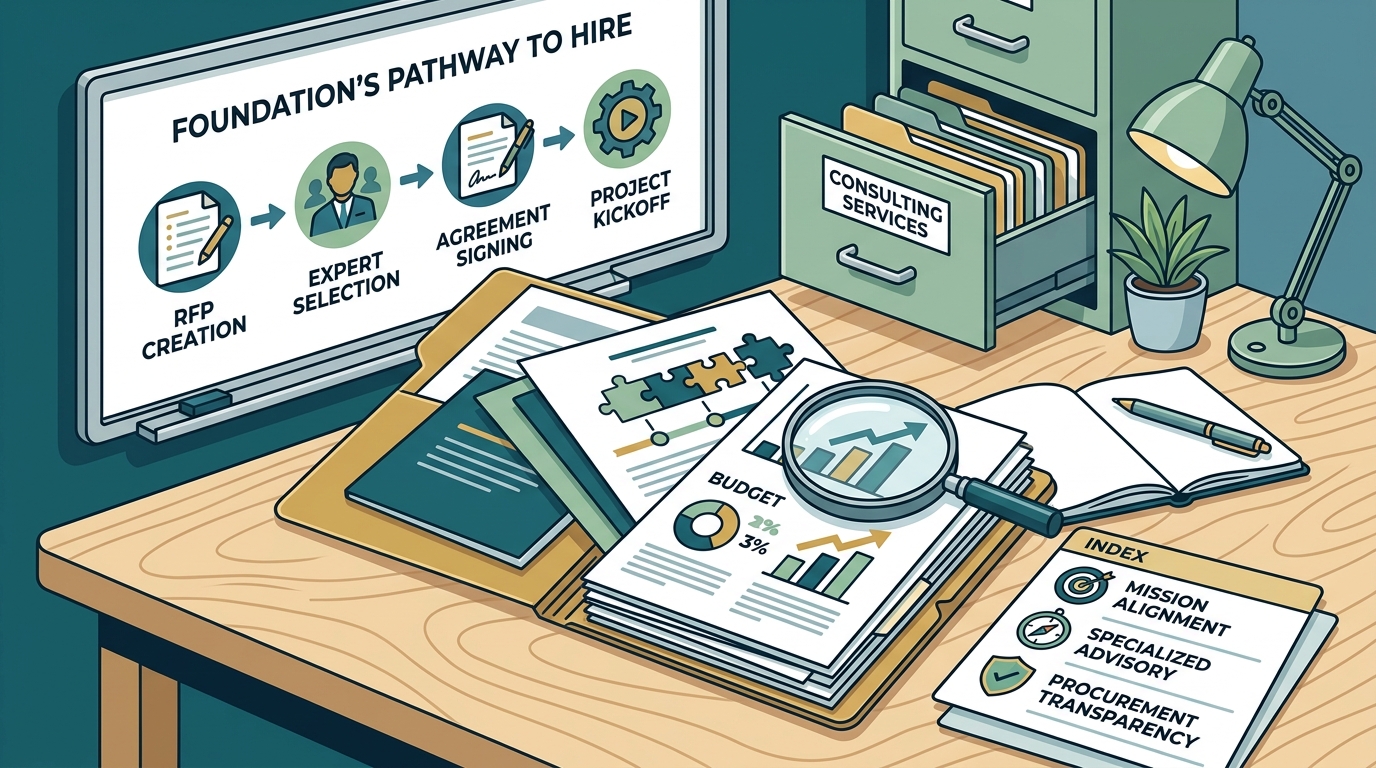
Foundation procurement operates through distinct phases that prioritize mission alignment over cost minimization. Social impact consulting is a specialized advisory practice focused on advancing organizational effectiveness, equity initiatives, and systemic change. Grantmakers typically initiate requests through internal budget reviews or strategic planning cycles. These evaluations determine whether external expertise addresses critical capability gaps. The procurement timeline often spans three to six months, requiring careful documentation and stakeholder approvals. Foundations prioritize vendors who demonstrate deep sector knowledge and measurable impact frameworks.
Identifying the Right Consultant Profile
Successful engagements begin with precise role definition. Independent practitioners must align their core competencies with specific foundation priorities. Strategic impact consulting is a structured advisory methodology that translates complex organizational challenges into actionable implementation roadmaps. Grantmakers evaluate candidates based on demonstrated sector experience, geographic familiarity, and proven delivery models. Many organizations now require consultants to submit portfolio case studies alongside standard credentials. This vetting process ensures that selected advisors possess the exact technical and relational skills required for mission-critical projects.
Navigating RFP Processes and Compliance Requirements
Request for proposal submissions demand rigorous adherence to foundation guidelines. Compliance documentation typically includes insurance certificates, conflict of interest disclosures, and financial stability statements. Foundations increasingly require consultants to demonstrate adherence to environmental, social, and governance standards. These requirements protect institutional assets while ensuring ethical vendor conduct. Practitioners who master compliance frameworks consistently secure higher contract values and longer engagement periods. Understanding these administrative prerequisites reduces submission rejection rates and accelerates approval timelines.
Evaluating Proposals and Selecting Partners
Selection committees weigh technical merit against cultural alignment. Proposal scoring matrices typically assign weighted values to methodology, team qualifications, and past performance metrics. Foundations prioritize consultants who demonstrate transparent communication protocols and adaptive problem-solving approaches. Many organizations conduct structured reference checks and pilot project evaluations before finalizing contracts. This rigorous vetting process minimizes project risk while maximizing strategic alignment. Successful vendors consistently deliver clear implementation roadmaps alongside realistic budget projections.
Structuring Contracts and Performance Metrics
Engagement agreements must clearly define deliverables, payment schedules, and termination clauses. Performance measurement frameworks typically track milestone completion, stakeholder satisfaction scores, and long-term impact indicators. Foundations increasingly require consultants to integrate equity-focused evaluation metrics into standard reporting structures. These requirements ensure that advisory work directly advances organizational mission objectives. Clear contractual boundaries prevent scope creep while establishing accountability benchmarks. Both parties benefit from structured review intervals and transparent communication channels.
Building Long-Term Consulting Relationships
Sustained partnerships require consistent value delivery and proactive communication. Foundations prioritize consultants who demonstrate institutional memory and adaptive learning capabilities. Strategic alignment consulting is a continuous advisory approach that evolves alongside organizational growth, market shifts, and evolving community needs. Successful practitioners transition from project-based engagements to retained advisory roles. This transition typically occurs after delivering measurable impact across initial pilot phases. Long-term partnerships reduce onboarding costs while deepening sector-specific expertise.
| Hiring Model | Typical Duration | Primary Use Case | Foundation Preference |
|---|---|---|---|
| Project-Based Consulting | Three to twelve months | Specific deliverables or audits | High |
| Retained Advisory Services | Twelve to thirty-six months | Ongoing strategic guidance | Very High |
| Interim Leadership Placement | Six to eighteen months | Executive transition support | Moderate |
| Specialized Technical Consulting | One to six months | Data systems or compliance | High |
Key Takeaways
- Foundation spending on external consulting has increased by nearly thirty percent over recent fiscal cycles.
- Procurement timelines typically span three to six months, requiring comprehensive documentation.
- Compliance frameworks now mandate environmental, social, and governance adherence from all vendors.
- Selection committees prioritize cultural alignment alongside technical proposal scoring.
- Retained advisory models consistently deliver higher contract values and longer engagement periods.
- Performance measurement frameworks increasingly integrate equity-focused evaluation metrics.
Frequently Asked Questions
How do foundations typically discover external consulting vendors?
Grantmakers primarily discover consultants through professional networks, industry conferences, and formal request for proposal platforms. Many organizations also rely on peer recommendations and sector-specific directories. Strategic networking within mission-driven circles significantly increases vendor visibility.
What documentation do foundations require during the initial vetting phase?
Foundations typically request insurance certificates, conflict of interest disclosures, financial stability statements, and portfolio case studies. These documents verify operational capacity and ethical compliance standards.
How are consulting proposals evaluated and scored?
Selection committees utilize weighted scoring matrices that prioritize methodology, team qualifications, past performance metrics, and cultural alignment. Technical merit consistently outweighs cost considerations.
What standard clauses appear in foundation consulting contracts?
Agreements typically define deliverables, payment schedules, termination clauses, intellectual property rights, and confidentiality requirements. Clear boundaries prevent scope creep while establishing accountability benchmarks.
How do foundations measure long-term consulting impact?
Organizations track milestone completion, stakeholder satisfaction scores, and long-term impact indicators. Equity-focused evaluation metrics increasingly form the core of performance reporting structures.
Can independent consultants transition from project work to retained partnerships?
Yes, practitioners who consistently deliver measurable impact across initial phases frequently transition into retained advisory roles. This progression reduces onboarding costs while deepening sector-specific expertise.
What resources help consultants prepare successful foundation submissions?
Practitioners benefit from structured proposal templates, compliance checklists, and sector-specific networking events. StrategicHope provides comprehensive frameworks and income calculators to streamline the engagement process. Calculate your income potential to align your pricing strategy with foundation budget expectations.
Ready to Secure Your Next Foundation Engagement?
Navigating the procurement cycle requires precise strategy, transparent communication, and proven delivery frameworks. StrategicHope empowers mission-driven professionals to build sustainable consulting practices that align with institutional priorities. Explore our comprehensive resources to streamline your vendor onboarding process. Contact our team to schedule a consultation. Learn more about our methodology and discover how structured advisory frameworks accelerate your practice growth. Complete a client gap assessment to identify your immediate scaling opportunities. Visit our main portal to access additional tools and sector-specific guides.