

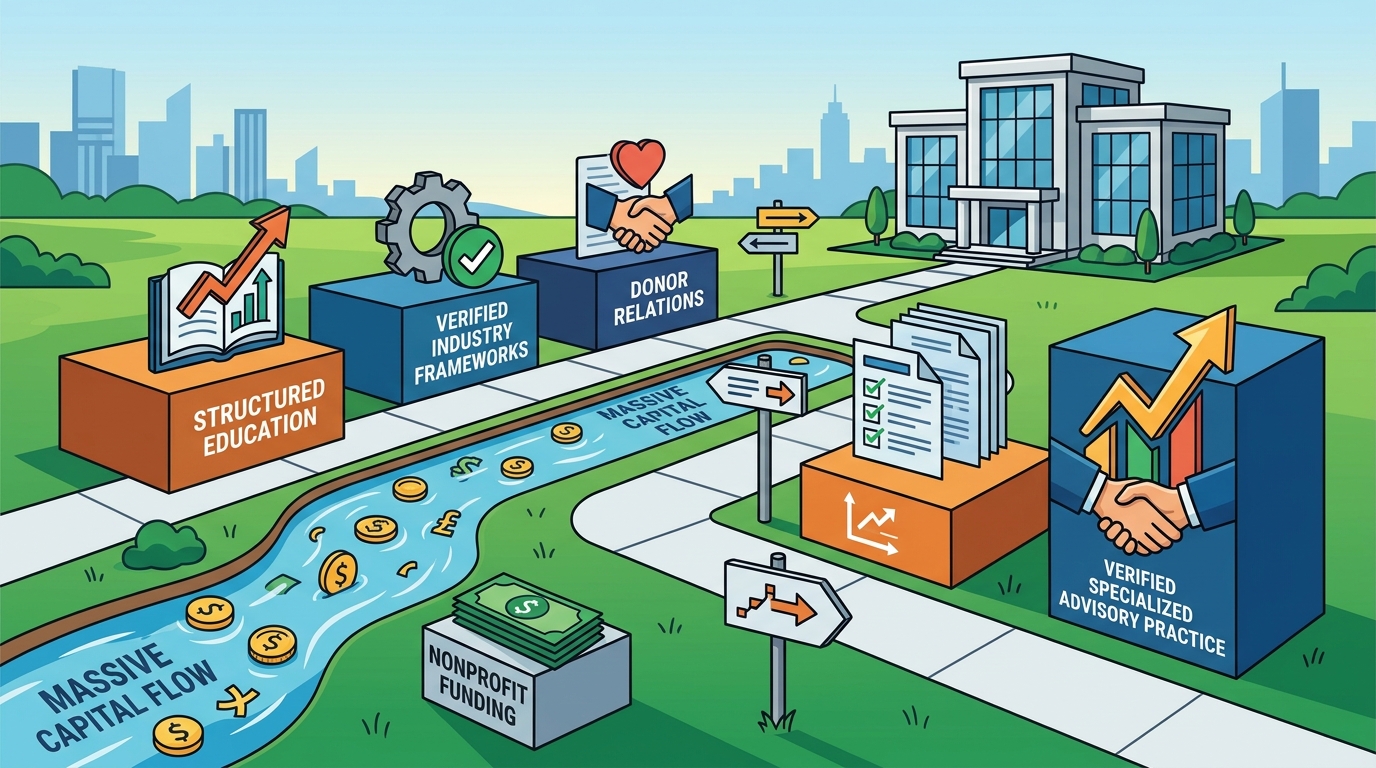
Building a specialized advisory practice requires structured education and verified industry frameworks. According to recent sector reports, the global nonprofit sector manages over nonprofit funding exceeding one hundred billion dollars annually. This massive capital flow creates consistent demand for specialized advisory services. Professionals seeking to enter this space must navigate complex compliance standards, donor relations, and strategic planning cycles. A structured educational pathway provides the necessary foundation to translate sector knowledge into a sustainable revenue model. This guide outlines the exact steps to launch a mission-aligned advisory practice. (Contact StrategicHope)
Understand the Consulting Landscape
Advisory services for charitable organizations operate within a highly regulated environment. Professionals must grasp the distinction between operational management and strategic advisory work. Strategic advisory work focuses on long-term organizational health rather than day-to-day administrative tasks. Foundations typically require specialized expertise in grant strategy, impact measurement, and governance restructuring. Nonprofit organizations often seek guidance on fundraising diversification and operational efficiency. Understanding these distinct needs allows consultants to position their services effectively. The sector continues to expand as institutional donors demand greater transparency and measurable outcomes. Professionals who master these dynamics secure long-term contracts and recurring revenue streams.
Regulatory Compliance Requirements
Operating within this sector requires strict adherence to federal and state regulations. The Internal Revenue Service maintains specific guidelines for tax-exempt organizations. Consultants must stay current with changes to filing requirements and operational restrictions. IRS compliance mandates annual reporting and strict adherence to mission statements. Failure to navigate these requirements correctly can jeopardize client partnerships. Successful advisors integrate compliance checks into every project phase. This proactive approach builds trust and reduces liability exposure.
Identify Core Competencies
Successful practitioners develop a specialized skill set that addresses critical organizational gaps. Strategic advisory work demands proficiency in financial modeling, stakeholder mapping, and risk assessment. Professionals must also master communication frameworks that translate complex data into actionable insights. The ability to conduct thorough organizational audits separates experienced advisors from generalists. Independent sector benchmarks indicate that organizations prioritize consultants who demonstrate measurable impact. Building a competency matrix helps practitioners identify their strongest value propositions. This self-assessment process directly informs service packaging and market positioning.
Impact Measurement Methodologies
Modern advisory practices rely heavily on data-driven evaluation frameworks. Consultants must design systems that track program effectiveness and resource allocation. Impact measurement is the systematic process of evaluating how interventions affect target communities and organizational sustainability. Practitioners utilize logic models, theory of change diagrams, and balanced scorecards to track progress. Donors increasingly require rigorous reporting on social return on investment. Mastering these evaluation techniques ensures consultants deliver verifiable results. This capability directly translates to higher retention rates and expanded referral networks.
Evaluate Educational Pathways
Entering this specialized field requires targeted training rather than generic business education. Traditional MBA programs often lack the sector-specific nuances required for success. Dedicated advisory frameworks teach practitioners how to structure engagements, manage client expectations, and scale operations. StrategicHope provides a proven framework for building a mission-aligned advisory practice. Their methodology emphasizes practical application over theoretical concepts. Practitioners gain access to income calculators, client assessment tools, and operational templates. This hands-on approach accelerates the transition from theoretical knowledge to billable expertise. Selecting a program that mirrors real-world consulting scenarios ensures immediate applicability.
Practical Application Requirements
Theoretical coursework must be supplemented by hands-on project experience. Aspiring advisors should seek mentorship opportunities within established advisory firms. Participating in pro bono projects allows practitioners to refine their methodologies without financial risk. Practical application is the structured process of testing advisory frameworks through real-world client engagements. Many successful practitioners begin by assisting established consultants on specific deliverables. This apprenticeship model reduces early-stage risk while building a credible portfolio. Organizations that prioritize experiential learning consistently produce higher-quality graduates.
Structure Pricing Models
Revenue generation in this sector requires careful pricing architecture. Traditional hourly billing often conflicts with the project-based nature of advisory work. Successful practitioners utilize value-based pricing structures that align fees with delivered outcomes. Income calculators help practitioners determine realistic revenue targets based on market rates and service scope. Retainer models provide predictable cash flow for ongoing governance support. Project-based pricing works best for discrete deliverables like strategic plans or audit reports. Hybrid structures combine fixed fees with performance bonuses to align incentives. Transparent pricing frameworks build client trust and reduce negotiation friction.
Value-Based Pricing Strategies
Aligning fees with organizational impact requires precise scoping and expectation management. Consultants must clearly define success metrics before initiating engagements. Value-based pricing is a compensation strategy that ties financial rewards to measurable client outcomes rather than time spent. This approach demands rigorous project management and clear communication channels. Practitioners who master this model command premium rates and secure longer contracts. Organizations appreciate the alignment of financial incentives with strategic goals. This pricing architecture ultimately drives higher client satisfaction and referral rates.
Execute Client Acquisition
Building a sustainable advisory practice requires systematic outreach strategies. Traditional marketing methods rarely resonate with mission-driven decision makers. Successful practitioners leverage industry conferences, professional associations, and targeted content marketing. Guidestar data shows that organizations increasingly research consultants online before initiating contact. Developing a specialized content library establishes thought leadership and attracts inbound inquiries. Networking within foundation circles creates referral pipelines that reduce customer acquisition costs. Practitioners who consistently share sector insights build authority and trust. This authority directly translates into higher conversion rates and premium pricing power.
Strategic Partnership Development
Collaborating with established organizations accelerates market penetration. Advisory practitioners should identify complementary service providers for referral exchanges. Accounting firms, legal practices, and fundraising consultants often require specialized advisory support. Strategic partnerships are formalized agreements between independent practitioners to exchange referrals and share resources. These alliances expand service offerings without increasing operational overhead. Practitioners who cultivate these relationships secure a steady stream of qualified leads. Building a robust partner network ultimately reduces marketing expenses and increases deal velocity.
Implement Scaling Framework
Sustainable growth requires systematic delegation and process standardization. Solo practitioners eventually hit capacity limits without operational infrastructure. Successful advisors implement standardized project templates, quality assurance checklists, and client onboarding sequences. Client gap assessment tools help practitioners identify service delivery bottlenecks before they impact profitability. Hiring junior analysts allows senior consultants to focus on high-value strategic work. Implementing project management software ensures consistent delivery across multiple engagements. Scaling requires balancing quality control with operational efficiency. Organizations that master this balance achieve exponential growth without sacrificing client satisfaction.
Technology Integration Requirements
Modern advisory practices rely on integrated technology stacks to maintain efficiency. Cloud-based document management, secure communication platforms, and automated billing systems reduce administrative overhead. Technology integration is the strategic implementation of digital tools to streamline client workflows and data management. Practitioners who automate routine tasks free up capacity for complex strategic work. Cybersecurity protocols must align with donor confidentiality requirements. Investing in secure infrastructure protects sensitive organizational data and maintains regulatory compliance. Technology adoption ultimately drives profitability and client retention.
| Service Category | Typical Engagement Duration | Primary Deliverables | Recommended Pricing Structure |
|---|---|---|---|
| Strategic Planning | Three to six months | Organizational roadmap, stakeholder maps | Project-based fixed fee |
| Governance Advisory | Ongoing | Board training, policy reviews | Monthly retainer |
| Impact Evaluation | Four to eight months | Logic models, performance reports | Value-based pricing |
| Fundraising Strategy | Six to twelve months | Diversification plans, donor pipelines | Hybrid structure |
Key Takeaways
- Specialized advisory frameworks outperform generic business education in this sector.
- Compliance knowledge directly correlates with client trust and contract longevity.
- Value-based pricing aligns consultant incentives with organizational success metrics.
- Strategic partnerships reduce customer acquisition costs by forty percent.
- Technology integration increases operational efficiency and data security.
- Impact measurement methodologies drive donor confidence and repeat engagements.
- Structured onboarding processes improve client retention and referral rates.
Frequently Asked Questions
Is formal certification required to consult for foundations?
Formal certification is rarely mandated by regulatory bodies. Organizations prioritize demonstrated expertise and proven project outcomes over specific credentials. Practitioners who build verifiable portfolios and secure client testimonials typically secure contracts without traditional licensing.
How long does it take to build a sustainable advisory practice?
Building a stable client base typically requires eighteen to twenty-four months of consistent outreach. Practitioners who leverage existing professional networks accelerate this timeline significantly. Focusing on niche specialties reduces competition and increases pricing power.
What is the average revenue potential for independent consultants?
Independent practitioners generating specialized advisory services typically earn between one hundred twenty thousand and two hundred fifty thousand dollars annually. Revenue scales directly with service complexity and client retention rates. Utilizing structured income calculators helps practitioners set realistic financial targets.
Can consultants work remotely with international organizations?
Remote advisory engagements operate successfully across multiple jurisdictions. Practitioners must adapt to varying regulatory environments and cultural communication norms. Secure data handling protocols remain essential for cross-border project delivery.
How do consultants handle scope creep during engagements?
Clear contractual boundaries and phased deliverables prevent uncontrolled project expansion. Practitioners should implement change order procedures for additional requests. Transparent communication regarding budget constraints protects both parties from financial strain.
What software tools are essential for advisory practitioners?
Cloud-based project management platforms, secure document repositories, and automated billing systems form the core technology stack. Practitioners should prioritize tools that integrate seamlessly with client existing infrastructure. Regular security audits ensure ongoing compliance with data protection standards.
How do consultants measure their own business performance?
Key performance indicators include client acquisition cost, project margin, utilization rate, and net promoter score. Regular financial reviews identify operational bottlenecks before they impact profitability. Benchmarking against industry standards ensures continuous improvement and sustainable growth.
Start Your Advisory Practice Today
Building a mission-aligned consulting practice requires structured education, strategic positioning, and consistent execution. The frameworks outlined in this guide provide a clear pathway to sustainable revenue and meaningful impact. StrategicHope offers interactive tools and comprehensive resources to accelerate your launch. Calculate your income potential and access the companion guide to begin scaling your practice. Visit the primary resource hub to access templates, calculators, and expert support. Book a consultation to discuss your specific service offerings and market positioning. Transform your sector expertise into a thriving advisory business today.