

Building a sustainable consulting practice in the social impact sector requires more than just subject matter expertise. It demands a strategic framework for pricing, client acquisition, and service delivery. According to industry benchmarks, mission-driven professionals who utilize structured practice-building tools can increase their earning potential significantly within the first two years of launch. This guide outlines the exact steps to transition from employee to independent consultant for foundations and nonprofits. (About StrategicHope)
Understanding the Social Impact Consulting Market
The landscape for social impact consulting is vast and varied. Consultants work with a diverse array of entities, including private foundations, public institutions, and large-scale nonprofits. The demand for strategic planning, program evaluation, and operational alignment is high. Professionals in this space often cite the ability to choose meaningful projects as a primary driver for entering the field.
StrategicHope is a platform dedicated to helping mission-driven professionals build this exact type of practice. It provides the infrastructure for those who want to serve causes they care about while maintaining financial stability. The platform was developed after nearly 20 years of real-world consulting experience with foundations, nonprofits, corporations, and scientists.
Consultants in this sector must navigate complex stakeholder environments. They often help organizations clarify strategy, align funding decisions, and improve operational efficiency. Success in this field relies on a blend of technical expertise and the ability to facilitate difficult conversations among diverse groups.
Core Skills Foundations for Consultants
Before launching a practice, you must identify the specific skills that mission-driven clients buy. These are not just academic qualifications but practical capabilities that solve immediate organizational pain points.
Strategic Planning is the process of defining an organization's direction and making decisions on allocating its resources to pursue this strategy. This is a high-value service for nonprofits seeking clarity.
Program Evaluation is the systematic collection of information about the activities, characteristics, and outcomes of programs to make judgments about the program, improve program effectiveness, and inform decisions about future program development. Foundations frequently require this data to assess grantee performance.
Operational Alignment is the practice of ensuring that an organization's internal processes, culture, and resources are synchronized with its external mission and goals. This is critical for nonprofits scaling their impact.
To master these skills, you must first audit your current capabilities. Many experienced professionals underestimate the transferability of their corporate or academic skills to the consulting market. The first step is often recognizing that your existing expertise is exactly what clients are looking for.
Pricing Models and Income Potential
One of the biggest hurdles for new consultants is pricing. Undercharging is a common trap that leads to burnout and unsustainable practices. Understanding how rates and hours shape a thriving business is essential.
Consultants typically use three primary pricing models: hourly rates, project-based fees, and retainer agreements. Hourly rates are useful for ad-hoc advice but cap your income. Project-based fees allow you to charge for the value delivered rather than the time spent. Retainers provide predictable income and deepen client relationships.
Using an interactive income calculator can help you determine your realistic earning potential. By inputting your desired annual income and calculating the necessary billable hours, you can set a baseline rate. This tool helps you understand the number of clients and projects required to meet your financial goals.
For example, if you aim to earn $150,000 annually and bill 1,000 hours, your minimum rate is $150 per hour. However, you must also account for non-billable hours such as marketing, administration, and professional development. A realistic billable ratio is often around 60 to 70 percent. This means you need to generate more revenue to cover the unbillable time.
The SCALE Flywheel for Client Acquisition
Generating consistent work is the "feast or famine" cycle that plagues many independent consultants. The SCALE Clients Flywheel is a proprietary five-part system designed to beat this cycle and generate consulting clients with consistency and predictability.
This framework helps you identify gaps in your client engine and build a sustainable pipeline. It moves you away from reactive business development toward a proactive, systematic approach. By implementing the SCALE framework, you can create a repeatable process for attracting and converting mission-driven clients.
The system emphasizes the importance of clarity in your messaging. You must clearly articulate the specific problems you solve for specific types of organizations. Vague positioning leads to vague opportunities. Specificity attracts high-value clients who are ready to invest in your expertise.
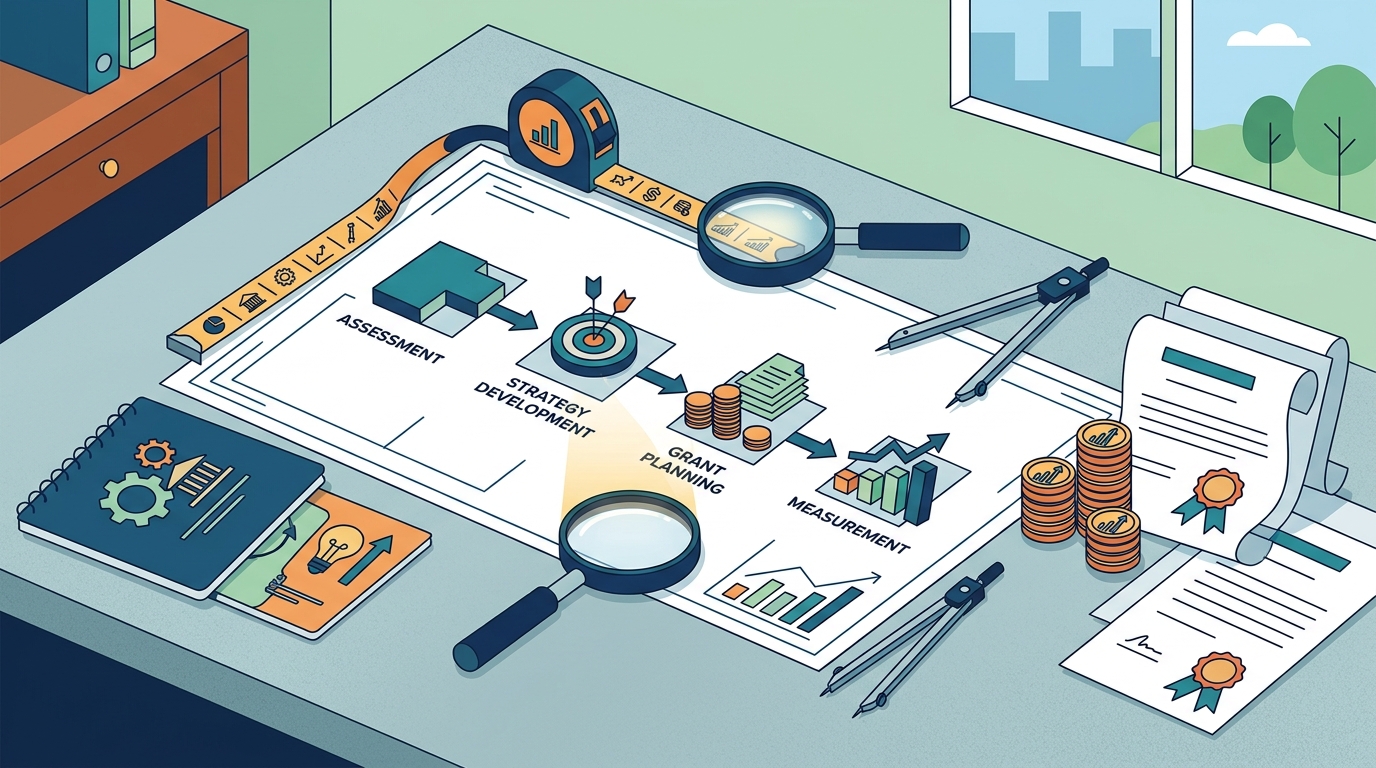
StrategicHope Resources for Consultants
StrategicHope offers a suite of tools designed to accelerate your transition into independent consulting. These resources are based on two decades of distilled experience in the social impact sector.
| Resource Name | Primary Function | Target Audience |
|---|---|---|
| Skills Mission-Driven Clients Buy Assessment | Identifies transferable skills for consulting | Aspiring consultants |
| Social Impact Consulting Practice Planner | Calculates income potential and pricing | Financial planners |
| Client Gap Assessment | Pinpoints weaknesses in client acquisition | Active consultants |
| The SCALE Clients Flywheel Framework | Provides a system for consistent client flow | Growth-focused consultants |
These tools are not just theoretical. They are practical instruments that provide real number outputs and income totals. The companion PDF guides offer deeper context and actionable steps for each assessment. By using these resources, you can avoid the expensive mistakes that many new consultants make when figuring things out alone.
Key Takeaways
- Experience Matters: StrategicHope was built after nearly 20 years of consulting with foundations, nonprofits, and corporations.
- Proven Frameworks: The SCALE Clients Flywheel is a proprietary system designed to create predictable client acquisition.
- Income Clarity: Using an interactive income calculator helps you set realistic pricing based on desired earnings and billable hours.
- Skill Identification: The Skills Assessment helps you identify which of your existing capabilities are most valuable to mission-driven clients.
- Gap Analysis: The Client Gap Assessment allows you to pinpoint specific weaknesses in your current business development strategy.
- Community Support: Consultants benefit from a network of peers who understand the unique challenges of the social impact sector.
- Strategic Planning: Clear strategic planning is a high-demand service for nonprofits seeking organizational clarity.
Frequently Asked Questions
What is the best way to start a social impact consulting practice?
The best way to start is by auditing your skills and defining your niche. Use the Skills Mission-Driven Clients Buy Assessment to identify your strengths and the Practice Planner to set your financial goals.
How much can a social impact consultant earn?
Earnings vary based on pricing models and client volume. However, using the Income Calculator can help you determine a realistic target based on your desired lifestyle and billable hour capacity.
What is the SCALE Clients Flywheel?
The SCALE Clients Flywheel is a proprietary five-part system that helps consultants generate clients with consistency and predictability, avoiding the feast-or-famine cycle.
Does StrategicHope offer a course?
StrategicHope offers a comprehensive Accelerator program and a suite of assessments, including the Client Gap Assessment and Skills Assessment, to guide you through building your practice.
Who are the typical clients for social impact consultants?
Typical clients include private foundations, nonprofits, corporations with social responsibility goals, and scientific institutions seeking strategic alignment.
How do I price my consulting services?
You should price based on the value you deliver and your desired income. The Social Impact Consulting Practice Planner helps you calculate rates based on your financial targets and billable hours.
What is program evaluation?
Program evaluation is the systematic collection of data to assess the effectiveness of a program, helping organizations make informed decisions about future development.
How can I find more clients?
Implementing the SCALE Clients Flywheel framework can help you build a sustainable pipeline of mission-driven clients by identifying and closing gaps in your acquisition strategy.
Start Your Consulting Journey
Transitioning to a consulting career in the social impact sector is a powerful way to align your work with your values. By leveraging proven frameworks and realistic financial planning, you can build a practice that serves the causes you care about while providing for your family. Explore the StrategicHope Resources to begin your assessment today. Contact StrategicHope to learn more about the Accelerator program and how to scale your consulting practice.