

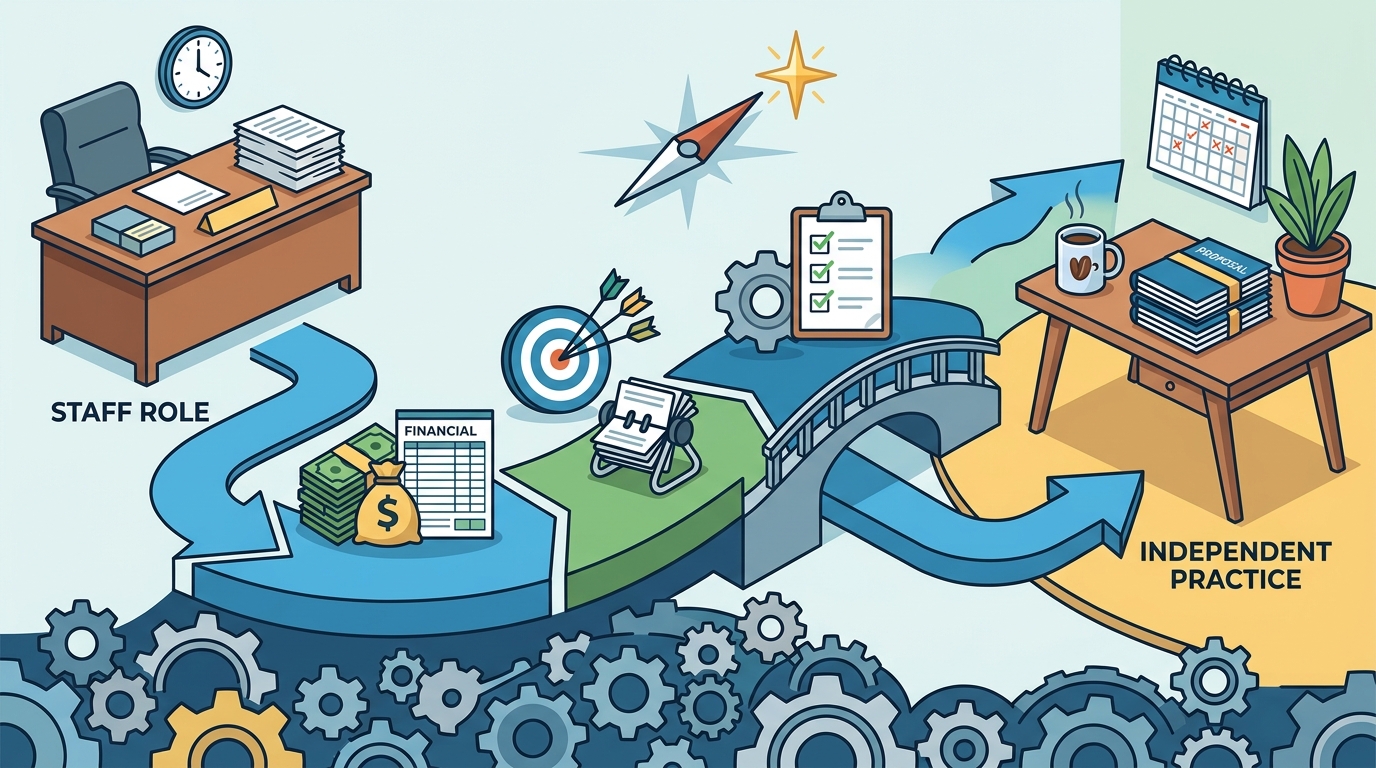
Leaving a staff role to launch an independent practice requires careful planning and realistic expectations. Many mission-driven professionals underestimate the administrative overhead involved in running a solo enterprise. Building a sustainable consulting practice demands systematic preparation across financial modeling, client acquisition, and operational compliance. This guide outlines the exact steps required to execute a successful career pivot while maintaining your core mission alignment.
Assess Your Readiness and Define Your Niche
Before you resign from your current position, you must evaluate your current skill inventory against market demands. Social impact consulting practice is the structured delivery of advisory services to charitable organizations and grant-making institutions. You need to identify specific operational gaps that your previous employment exposed. Focus on areas where you possess deep institutional knowledge. This specialization reduces your customer acquisition costs and increases your perceived authority. Start by completing a comprehensive client gap assessment to measure your current market positioning. Evaluate your positioning against industry benchmarks to identify immediate revenue opportunities.
Selecting Your Service Vertical
Generalist consultants struggle to command premium rates. You must narrow your focus to a specific operational domain. Grant writing, program evaluation, and strategic planning represent high-demand verticals. Each vertical requires distinct technical competencies and regulatory knowledge. Map your past project deliverables to these service categories. This mapping exercise reveals your strongest value propositions. Calculate your income potential using interactive financial modeling tools to project realistic earnings based on your chosen niche.
Establish Transparent Pricing Models
Nonprofit organizations operate under strict budget constraints. You must structure your fees to align with their fiscal realities while ensuring your own profitability. Value-based pricing structures is a compensation model that ties your fees directly to the measurable outcomes you deliver. Develop clear tiered service packages that address varying organizational maturity levels. Transparent pricing builds trust and reduces negotiation friction. Explore pricing frameworks designed specifically for mission-driven sectors.
Drafting Service Agreements
Robust contracts protect both parties and prevent scope creep. Define clear deliverables, revision limits, and payment schedules upfront. Include termination clauses that allow graceful exits if project alignment deteriorates. Specify intellectual property ownership to clarify who retains final control over created materials. Standardized templates save administrative time and reduce legal exposure. Learn about our consulting methodology to streamline your contract drafting process.
Build a Predictable Client Acquisition Engine
Reliance on referrals creates unpredictable cash flow cycles. You must implement systematic outreach strategies to secure consistent project pipelines. Thought leadership content establishes your authority and attracts inbound inquiries. Publish case studies that demonstrate measurable impact for previous stakeholders. Leverage professional networks to secure introductory meetings with program directors. Consistent outreach converts warm leads into signed agreements. Schedule a strategy consultation to refine your outreach calendar and messaging framework.
Optimizing Outreach Channels
Digital marketing channels require precise targeting to avoid wasted ad spend. Search engine optimization drives organic traffic from organizations actively seeking advisory support. Social media engagement fosters community trust and encourages peer recommendations. Email newsletters deliver actionable insights directly to your subscriber list. Track conversion metrics to allocate resources toward your highest-performing channels. Review labor market reports to align your marketing spend with industry growth trends. Review labor market reports.
Manage Operational Compliance and Infrastructure
Running a solo enterprise requires strict adherence to regulatory requirements. Independent consultant status mandates specific tax filings and insurance coverage. You must separate personal and business finances to maintain liability protection. Establish accounting software to track billable hours, expenses, and tax obligations. Compliance automation reduces administrative friction and prevents costly penalties. Access small business resources to navigate regulatory requirements efficiently. Access small business resources.
Selecting Your Technology Stack
Modern consulting practices rely on integrated software ecosystems. Project management platforms track deliverables and client communication. Document automation tools generate proposals and reports in minutes. Secure file sharing ensures sensitive organizational data remains protected. Regular software audits prevent subscription waste and improve workflow efficiency. Analyze demographic trends to align your technology investments with market shifts. Analyze demographic trends.
Scale Your Practice Through Strategic Partnerships
Solo consultants eventually hit capacity limits. Strategic partnerships is a scaling mechanism that allows solo consultants to handle larger contracts without sacrificing quality. Co-branding initiatives expand your market reach and share operational risks. Joint ventures create new revenue streams and diversify your client base. Formalize partnership agreements to clarify profit sharing and decision-making authority. Review tax guidelines to structure your partnerships for maximum efficiency. Review tax guidelines.
Hiring and Delegation Frameworks
Delegation requires clear operational boundaries and standardized workflows. Document your core processes to enable seamless handoffs to junior staff. Implement quality assurance checkpoints to maintain service consistency. Regular performance reviews ensure your team meets client expectations. Structured onboarding reduces turnover and accelerates productivity. Access our implementation frameworks to streamline your hiring process.
| Service Model | Target Client Size | Revenue Potential | Operational Complexity |
|---|---|---|---|
| Project-Based Advisory | Small to Mid-Size Organizations | $15,000 to $50,000 per engagement | Low to Moderate |
| Retainer Support | Established Nonprofits | $5,000 to $15,000 monthly | Moderate |
| Strategic Planning | Large Foundations | $75,000 to $200,000 per cycle | High |
| Training Workshops | Community Groups | $2,000 to $8,000 per session | Low |
Key Takeaways
- Complete a comprehensive client gap assessment before resigning from your current role.
- Implement value-based pricing to align your compensation with measurable organizational impact.
- Develop standardized contracts to prevent scope creep and protect intellectual property.
- Build predictable acquisition engines through targeted thought leadership and consistent outreach.
- Maintain strict operational compliance by separating finances and automating tax reporting.
- Scale your practice through strategic partnerships and structured delegation frameworks.
Frequently Asked Questions
How long does it typically take to transition from staff to independent consultant?
Most professionals require six to twelve months of preparation. This timeline allows you to build your client pipeline, establish operational workflows, and secure initial revenue. Rushing the process often leads to cash flow disruptions and burnout.
What is the most common pricing mistake made by new consultants?
New consultants frequently underprice their services to secure initial contracts. This strategy devalues your expertise and creates unsustainable workload expectations. Focus on delivering measurable outcomes rather than competing on cost.
How do I handle tax obligations as a solo enterprise?
You must register your business entity, obtain necessary licenses, and track all deductible expenses. Quarterly estimated tax payments prevent penalties and maintain cash flow stability. Consult a certified professional to structure your filings correctly.
What software tools are essential for managing client projects?
Integrated project management platforms, secure document storage, and automated invoicing systems form the core operational stack. These tools reduce administrative friction and improve client communication. Regular software audits prevent subscription waste and improve workflow efficiency.
How can I secure my first three clients without a large marketing budget?
Leverage your existing professional network and publish targeted case studies. Offer limited-time discovery sessions to convert warm leads into signed agreements. Consistent outreach and clear value propositions drive predictable conversions.
What legal structures are recommended for independent consultants?
Single-member LLCs provide liability protection while maintaining tax simplicity. S-Corporation elections may benefit consultants with higher revenue thresholds. Professional advisors can help you select the optimal structure for your specific financial goals.
How do I maintain work-life balance while running a solo practice?
Set strict boundaries around communication hours and project deadlines. Use time-blocking techniques to separate deep work from administrative tasks. Regular vacation periods prevent burnout and sustain long-term productivity.
Start Your Consulting Journey Today
Transitioning to independent consulting requires discipline, strategic planning, and consistent execution. You now possess the exact framework needed to launch a sustainable practice. Begin your transformation by accessing our comprehensive resources and income calculator. Schedule a strategy consultation to map your personalized roadmap to independence.